How Popular Is Basketball in Australia?
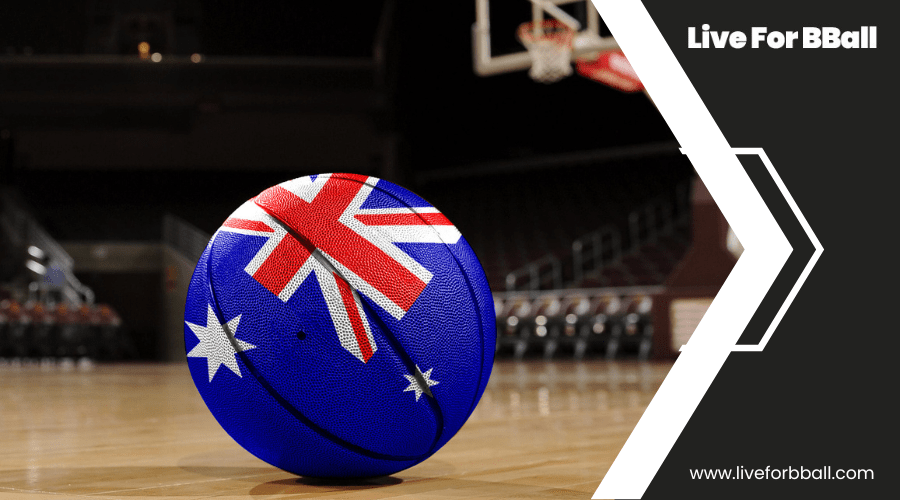
When you think about sports in Australia, basketball might not be the first to come to mind, but it's notably popular. With around one million Australians actively participating, it ranks as the second most popular team sport in terms of participation. The National Basketball League (NBL), established in 1979, along with the success of the national teams, the Boomers and Opals, have significantly contributed to this growth. Grassroots programs and community initiatives ensure the sport's accessibility. Additionally, media coverage and corporate sponsorships are playing pivotal roles in shaping its future trajectory.
History of Basketball in Australia
Basketball was introduced to Australia in 1897 and swiftly gained popularity among sports enthusiasts. The first recorded game occurred at the Our Boys Institute (OBI) in Adelaide, where OBI competed against the YMCA. This early interest provided a solid foundation for the sport's expansion in the country.
In 1931, the formation of the Victorian Basketball Association marked a crucial step in organizing basketball. Shortly afterward, the NSW Basketball Association was established, further formalizing the sport in Australia. These organizations were pivotal in nurturing local talent and developing structured competitions.
The creation of the Amateur Basketball Union (ABU) in 1939 brought national cohesion to basketball in Australia. This body, later renamed the Australian Basketball Federation, became the primary national governing entity. It played a significant role in overseeing the sport's development and promoting its growth nationwide. Their efforts transformed basketball into one of Australia's leading participation sports.
Currently, around one million Australians actively play basketball, underscoring its broad appeal and strong community presence. The sport's rich history and the support from organizations like the Victorian Basketball Association and the Australian Basketball Federation have ensured its enduring popularity and vibrant participation at all levels.
National Basketball League (NBL)
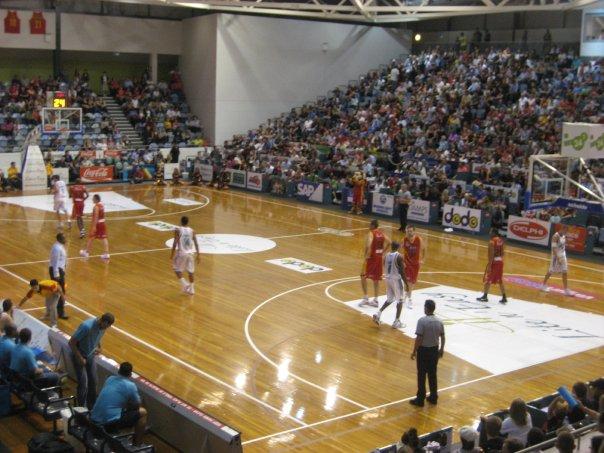
Since its establishment in 1979, the National Basketball League (NBL) has emerged as Australia's premier men's basketball competition, showcasing top talent from both Australia and abroad and significantly boosting the sport's popularity in the country.
The league saw considerable growth in the 1980s, driven by an influx of American players, which not only raised the quality of the game but also boosted attendance and fan engagement. However, the late 1990s marked a period of decline, with fluctuating attendance in the 2000s posing additional challenges. A remarkable turnaround occurred in 2015, largely fueled by the success of Australian players in the NBA.
Key highlights include:
- 1980s Growth: The arrival of American players elevated the league's quality and popularity.
- Late 1990s Decline: A drop in attendance and interest presented significant challenges.
- 2015 Resurgence: The achievements of Australian players in the NBA rekindled local interest.
- Late 2010s Record Attendance: Renewed enthusiasm led to unprecedented fanbase growth and attendance figures.
The NBL continues to evolve, enhancing fan engagement through increased media coverage and community events, ensuring basketball remains a vital part of Australian sports culture.
Australian National Teams
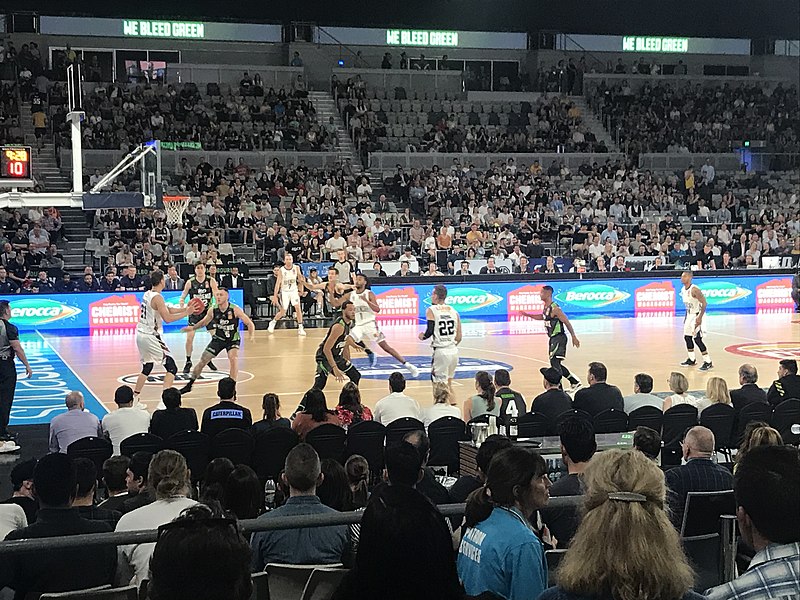
Giacontigers, South East Melbourne Phoenix vs. Adelaide 36ers, CC BY-SA 4.0
When examining the Australian national teams, a rich history of notable achievements stands out. The Boomers' Olympic Bronze at Tokyo 2020 and the Opals' multiple Olympic medals underscore their global success. With key players often hailing from the NBA and a promising future, their influence on basketball's popularity in Australia is significant.
Achievements and Milestones
Australia's national basketball teams have consistently demonstrated their prowess on the global stage, achieving numerous notable milestones. The Boomers, Australia's men's national basketball team, and the Opals, the women's national team, have both made significant impacts in international competitions.
The Boomers have shown dominance in regional play, winning 19 FIBA Oceania Championships and securing a FIBA Asia Cup. Their crowning achievement came at the Tokyo 2020 Olympics, where they earned their first-ever Olympic Bronze medal in men's basketball, solidifying their position as a formidable global force.
The Opals have also excelled, earning Olympic silver medals in 2000, 2004, and 2008. They reached a pinnacle of success at the 2006 FIBA World Championship, capturing the gold medal and establishing themselves as a powerhouse in women's basketball.
A summary of their accomplishments includes:
- The Boomers' 19 FIBA Oceania Championships
- The Boomers' Olympic Bronze medal at Tokyo 2020
- The Opals' Olympic silver medals in 2000, 2004, and 2008
- The Opals' gold medal at the 2006 FIBA World Championship
These achievements underscore the remarkable talent and dedication of Australia's national basketball teams.
Key Players and Successes
The Boomers and Opals have elevated Australian basketball to global prominence with their impressive achievements and standout players. The Boomers, Australia's men's national basketball team, have consistently excelled on the international stage. They have won 19 FIBA Oceania Championships and clinched a historic bronze medal at the Tokyo 2020 Olympics. This success is no accident; it stems from a foundation of exceptional talent, with players like Patty Mills and Ben Simmons making significant impacts in the NBA.
Similarly, the Opals, Australia's women's national basketball team, have been highly successful. They have secured multiple Olympic medals, including silver in 2000, 2004, and 2008, and a gold medal at the 2006 FIBA World Championship. Their achievements have set a high standard for women's basketball globally. The success of both the Opals and Boomers has raised the profile of basketball in Australia, inspiring a new generation of players and increasing grassroots participation.
The impact of these teams is undeniable. Their accomplishments have brought international recognition and ignited a growing passion for basketball across the country. The continued success of the Boomers and Opals promises an exciting future for Australian basketball.
Future Prospects and Challenges
The future of Australia's national basketball teams holds both promise and challenges. The Boomers' recent bronze medal at the Tokyo 2020 Olympics has galvanized national interest, while the Opals' history of success, including multiple Olympic silver medals, highlights their global influence in women's basketball. However, challenges persist.
Several promising factors include:
- Active Participation: Around one million Australians are engaged in basketball, creating a substantial talent pool.
- NBA Presence: Players like Ben Simmons and Patty Mills elevate the national teams' performance and inspire young athletes.
- Grassroots Programs: Ongoing initiatives and media coverage aim to nurture talent, ensuring Australia's competitive edge.
- Women's National Basketball League: The league's growth supports the development of female players, bolstering the Opals' future prospects.
Despite these positives, maintaining momentum is challenging due to the fierce competition within Australia. While the sport's increasing visibility helps, ongoing investment in both men's and women's programs is crucial. Ensuring equal opportunities and resources for female players is vital for sustained success. Balancing these factors will determine Australia's future performance on the global stage.
Participation Rates and Demographics
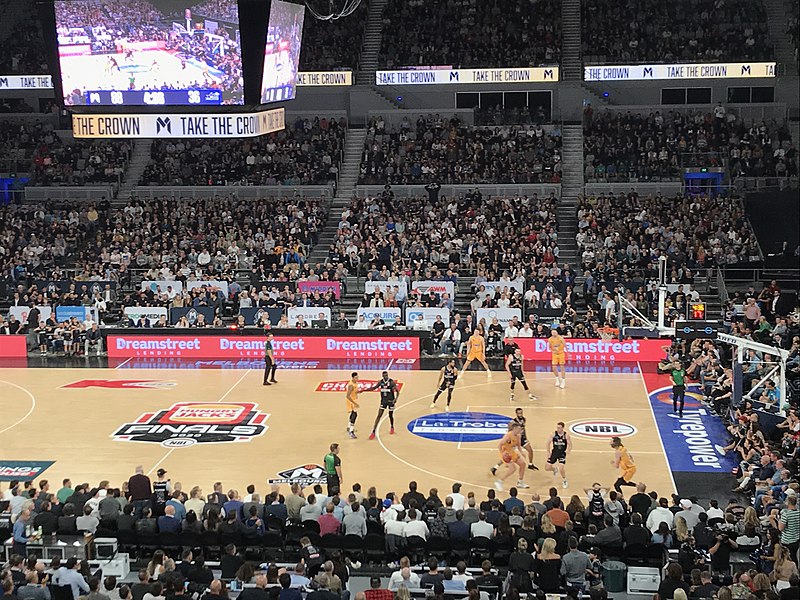
Giacontigers, Melbourne United vs. Sydney Kings, CC BY-SA 4.0< /a>
Imagine walking into any community center or school gym in Australia, and you'll likely see a lively basketball game in progress. With around one million Australians participating, basketball ranks as the second highest team participation sport in the country. This widespread involvement is no accident; it's driven by grassroots programs that promote early engagement and ongoing participation. These initiatives have been instrumental in nurturing talent from a young age, contributing to the sport's robust player base.
Participation spans diverse demographics. Approximately one in three Australians, including men, women, boys, and girls, express interest in basketball. This is reflected in the popularity of Australia's women's national team, which has inspired many young women to take up the sport. Community-driven initiatives and basketball clubs offer affordable opportunities, making the sport accessible to people of all generations and economic backgrounds.
Basketball isn't just a youth sport; it enjoys popularity across all age ranges. Local associations foster healthy competition and camaraderie, keeping people engaged long-term. The result is a dynamic and inclusive basketball scene that continues to grow, driven by committed grassroots programs and community support.
Media and Corporate Support
During the NBL's golden era, basketball enjoyed peak media attention, but this waned in the 2000s due to declining corporate support, impacting league stability. However, since the mid-2010s, there has been a resurgence in media coverage and corporate sponsorships, driving record attendance and investment in infrastructure. To sustain this growth, maintaining strong media and corporate engagement will be essential.
Historical Media Coverage
The allure of basketball in Australia has experienced significant fluctuations, shaped by varying levels of media and corporate support. During the NBL's golden era from the mid-1980s to the mid-1990s, the sport enjoyed peak media coverage and widespread popularity. However, the 2000s saw a decline in both corporate backing and media visibility, leading to challenging times for Australian basketball.
This trend reversed around 2015, coinciding with an influx of Australian players achieving success in the NBA. This resurgence revitalized the NBL, resulting in record-breaking attendance figures by the late 2010s and a rejuvenated media presence.
Key periods:
- Mid-1980s to mid-1990s: NBL's golden era with peak media coverage.
- 2000s: Decline in corporate support and media visibility.
- 2015: Resurgence linked to Australian NBA players.
- Late 2010s: Record-breaking NBL attendance and renewed media presence.
Despite these gains, maintaining consistent media coverage remains a challenge. The rise of social media and digital platforms has been instrumental in enhancing fan engagement and ensuring basketball's continued growth and popularity in Australia.
Corporate Sponsorship Trends
Corporate sponsorship in Australian basketball has experienced significant fluctuations, deeply impacting the sport's stability and growth. During the 2000s, a decline in sponsorships adversely affected the league's stability. However, the mid-2010s marked a turning point, leading to an influx of sponsorship deals.
Major brands like Spalding have been pivotal in this resurgence. Their product endorsements have increased the visibility of basketball in Australia and enhanced its appeal. Partnerships with organizations such as Hoop City have further amplified this effect through various promotional activities.
Increased media coverage in recent years has also attracted more corporate investments. This attention has raised the profile of basketball events, making them more appealing to fans and potential sponsors. The surge in attendance at NBL events reflects this growing popularity, encouraging businesses to invest in basketball-related sponsorships.
Community engagement initiatives, such as charity matches and local events, have solidified corporate support. These efforts demonstrate basketball's potential for growth and sustainability in Australia. In summary, corporate sponsorships have been essential in shaping the sport's current landscape.
Future Media Prospects
As corporate sponsorship regains momentum, it's worth examining how future media prospects could further strengthen basketball's standing in Australia. The NBL's resurgence in the mid-2010s has led to increased media attention and record attendance, setting the stage for substantial growth. To sustain this momentum, leveraging media rights and corporate sponsorships will be crucial.
Broadcasters and digital platforms are increasingly interested in the NBL, partly due to the international appeal of Australian players in the NBA. This interest boosts media engagement and attracts lucrative corporate partnerships. To capitalize on these opportunities, the NBL must focus on expanding fan interaction through innovative digital platforms and social media, enhancing accessibility and engagement with basketball content.
Consider these strategies for the future:
- Enhanced media rights deals: Securing comprehensive broadcasting agreements to ensure widespread coverage.
- Innovative digital platforms: Utilizing apps and websites for live streaming and exclusive content.
- Social media campaigns: Engaging fans with interactive content and live updates.
- Corporate sponsorships: Partnering with brands to create captivating fan experiences.
Grassroots and Youth Development
View this post on Instagram
Grassroots and youth development are pivotal to basketball's growing popularity in Australia. Local clubs nationwide offer affordable opportunities, boosting participation rates to around one million Australians. These grassroots programs are essential for early engagement, making basketball accessible to both children and adults. Community-driven initiatives significantly enhance this accessibility.
Collaborations between schools and local clubs increase youth involvement, creating structured pathways for young players to develop their skills. These partnerships ensure that emerging athletes have the resources and guidance they need to succeed. Specialized training programs and scholarships for talented youngsters further support their development, helping them aspire to higher levels of competition.
Inclusivity is a fundamental aspect of grassroots efforts, aiming to involve underrepresented groups and ensure a diverse future for the sport. By focusing on inclusivity, these programs help build a robust and varied basketball community. This holistic approach to player development not only nurtures talent but also strengthens the sport's foundation in Australia. Consequently, basketball's popularity continues to rise, supported by a robust grassroots and youth development system.