Indoor vs. Outdoor Basketball Courts
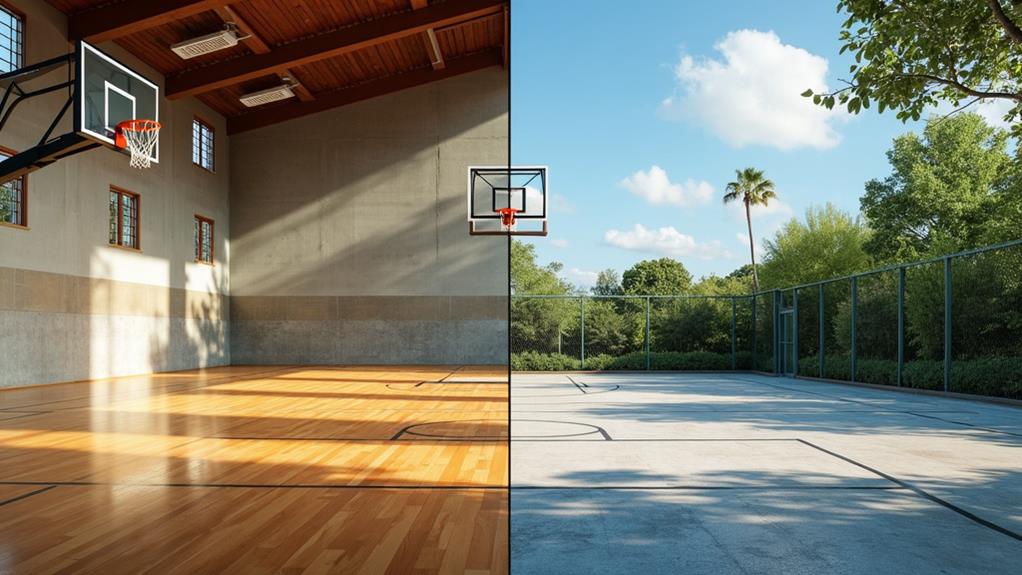
When deciding whether to play on indoor or outdoor basketball courts, it is important to consider the differences in surface characteristics and their impact on gameplay. Indoor courts, typically made of hardwood, provide smooth, consistent surfaces that enhance control and minimize injury risks. In contrast, outdoor courts, often made of asphalt or concrete, can be rougher and more unpredictable due to weathering. This variability affects player performance and safety. Additionally, weather conditions and maintenance requirements play significant roles in this decision. How do these factors influence your choice between indoor and outdoor courts?
Overview Comparison
| Feature | Indoor Basketball Courts | Outdoor Basketball Courts |
|---|---|---|
| Surface Material | Hardwood (typically maple), synthetic materials | Concrete, asphalt, sometimes rubber or acrylic surfaces |
| Environment | Controlled (temperature, lighting, humidity) | Exposed to natural elements (weather, sunlight, wind) |
| Durability | Less durable due to softer surface, but protected from weather | Highly durable, built to withstand harsh conditions |
| Usage | Primarily for professional and organized games | Casual play, recreational games, and public use |
| Maintenance | Requires regular polishing, cleaning, and climate control | Minimal maintenance but susceptible to wear from weather |
| Cost | Higher due to specialized materials and climate control | Lower cost due to simple construction and common materials |
| Basketball Hoop | Mounted on wall or ceiling with breakaway rims | Mounted on posts or standalone, with standard rims |
| Accessibility | Usually requires membership, reservations, or fees | Often free, accessible in public parks and communities |
| Playing Conditions | Consistent and ideal for performance; no interruptions from weather | Can be affected by wind, rain, or uneven surface |
Court Surface Characteristics
When comparing indoor and outdoor basketball courts, the surface characteristics significantly impact the overall playing experience. Indoor basketball courts, typically made from hardwood materials like maple or oak, provide natural traction and a consistent playing surface, ensuring better ball control and a predictable playing experience. These surfaces range from smooth to slightly textured, offering excellent grip and traction.
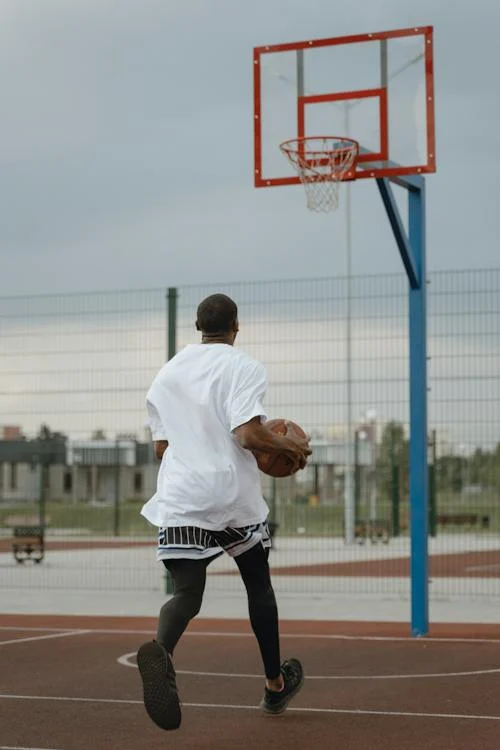
In contrast, outdoor courts are often constructed from asphalt, concrete, or rubber, chosen for their durability and weather resistance. These materials can vary greatly in texture, becoming rougher due to environmental wear. Weather conditions, such as rain, snow, or intense sunlight, can significantly influence outdoor courts, affecting ball control and player safety.
Maintenance requirements also differ substantially. Indoor courts require regular upkeep, including tasks like polishing and refinishing the hardwood to maintain quality and safety. Outdoor courts need periodic maintenance to address weather-related wear and debris accumulation, ensuring they remain safe and playable. Additionally, the color schemes of indoor and outdoor courts contribute to visibility, with indoor courts featuring varied designs and outdoor courts often using bright colors for better contrast.
Gameplay Dynamics
Playing on an indoor court provides smoother surfaces, enhancing ball handling and dribble control. This improved traction allows for quicker movements and reduces the risk of slips, making the game safer. Conversely, outdoor courts can be uneven and slippery, especially when wet, which can slow the game down and increase the risk of falls.
Ball Handling Variability
Ball handling can vary significantly between indoor and outdoor basketball courts, impacting overall gameplay dynamics. Indoor courts feature smooth flooring that enhances ball control and ensures consistent dribbling, which in turn improves shooting accuracy and general performance. Conversely, outdoor surfaces often result in unpredictable bounces, requiring constant adaptation in handling style.
| Factors | Indoor Basketball Courts | Outdoor Surfaces |
|---|---|---|
| Ball Control | Superior | Challenging |
| Bounce Predictability | Consistent | Unpredictable |
| Traction | Excellent | Variable |
| Environmental Factors | Minimal Impact | Significant Impact |
| Surface Irregularities | Rare | Common |
Indoor courts provide better traction, supporting quick movements like crossovers and fast breaks, thereby increasing agility. Outdoor courts, especially when wet, can be slippery, making it easier to lose ball control. Surface irregularities outdoors can slow down gameplay, hindering fast-paced dribbling and sudden changes. Additionally, indoor environments offer gameplay consistency, free from environmental factors like wind and rain that can significantly affect outdoor ball handling. Understanding these differences helps you adjust your strategy for optimal performance on any court.
Traction and Safety
Traction and safety are crucial elements that significantly impact gameplay dynamics on basketball courts. Indoor courts, typically featuring smooth hardwood surfaces, offer superior traction. This enhanced foot grip allows for quicker directional changes and acceleration, which are vital for competitive play and skill development. The even surfaces of indoor courts also reduce the risk of slips and falls, providing a safer environment for players to perform at their best.
Conversely, outdoor courts pose various challenges. Rougher textures and inconsistent conditions, especially when wet, can make these courts slippery, increasing the likelihood of injuries. Uneven surfaces like asphalt and concrete complicate ball handling and heighten the risk of ankle injuries. The lack of shock absorption on these surfaces can lead to greater physical strain over time.
Indoor courts are designed with safety features that prioritize player movement and overall well-being. The superior traction and shock absorption they offer create a safer environment, essential for both casual and competitive play. In summary, indoor courts provide a consistent and safer playing experience, whereas outdoor courts demand extra caution to prevent injuries and maintain effective gameplay.
Choosing the Right Surface
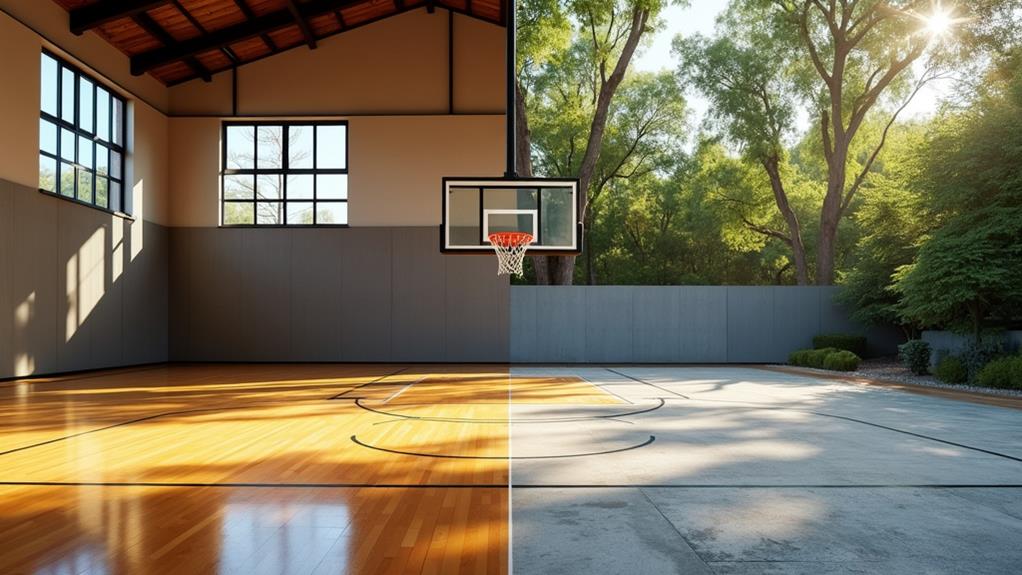
Selecting the right surface for your basketball court can significantly impact your playing experience and performance. For indoor courts, hardwood is the top choice. It offers natural traction and cushioning, enhancing player safety and performance. Players benefit from consistent bounce and foot traction, making hardwood ideal for competitive play and professional training.
Outdoor surfaces like asphalt or concrete are more accessible and cost-effective, suitable for casual and recreational play. While durable, these surfaces can be harder on the joints and may require more maintenance due to weather-related wear and tear, which can affect player safety and performance.
Your choice should reflect the intended use. For regular, high-level training, an indoor court, despite its higher cost, offers longevity and superior playing conditions. Conversely, for recreational play, an outdoor court is a practical and budget-friendly option. Remember, maintenance is crucial for outdoor courts to ensure safety and durability. Balancing your budget, surface durability, and specific needs will help you make the best choice.
Impact on Player Performance
When playing on an indoor basketball court, you will experience a consistent bounce and smooth surface texture, which enhance ball control and overall gameplay. Indoor courts also offer better shock absorption, reducing physical strain and helping to preserve joint health, thus allowing you to maintain peak performance. Conversely, outdoor courts present challenges with their unpredictable bounces and harder surfaces, which can affect dribbling and shooting accuracy, making each game more physically demanding.
Bounce Consistency Differences
Bounce consistency significantly affects player performance on basketball courts. Indoor basketball courts, typically made of hardwood floors, provide a consistent and predictable bounce. This uniformity enhances ball control and shooting accuracy, facilitating the development of reliable skills. In contrast, outdoor courts, usually constructed from asphalt or concrete, often yield unpredictable bounces due to surface irregularities and general wear. These factors complicate ball handling and game dynamics, requiring constant adjustments to your play.
The bounce height on indoor surfaces remains uniform, ensuring a reliable ball trajectory that supports faster-paced gameplay and dynamic offensive strategies. Outdoor courts, however, are influenced by environmental factors such as moisture and temperature, which affect the surface and lead to varying bounce characteristics that can change throughout a game. Consequently, ball control and shooting accuracy may suffer on outdoor courts compared to the predictable environment of indoor courts.
Ultimately, the consistent bounce of indoor courts offers a stable platform for skill development, while the variability of outdoor courts presents unique challenges that can disrupt gameplay.
Physical Strain Factors
Playing on different types of basketball courts can significantly impact your physical well-being. Indoor basketball courts typically offer better shock absorption, reducing physical strain on your joints and muscles. Conversely, outdoor courts, often made of asphalt or concrete, are much harder on your body.
Key considerations include:
- Shock absorption: Indoor courts minimize physical strain, whereas outdoor courts exacerbate it.
- Unpredictable ball trajectories: Indoor courts offer consistent bounces, reducing injury risk, unlike outdoor courts.
- Environmental factors: Wind and temperature extremes on outdoor courts increase fatigue and affect performance.
- Slips and falls: Wet outdoor courts heighten the risk of injury compared to the stable surfaces of indoor courts.
- Controlled environment: Indoor courts provide a setting free from weather elements, allowing you to focus on performance.
Weather Considerations
Weather significantly influences the viability of outdoor basketball courts for regular use. Outdoor courts are subject to weather conditions such as rain, wind, and extreme temperatures, all of which affect gameplay and player safety. Rain can create slippery surfaces, increasing the risk of falls and injuries. Wind can alter the ball's trajectory, making it challenging to maintain control and accuracy. Extreme temperatures can cause discomfort and pose health risks.
Additionally, severe weather can lead to court erosion, creating surface irregularities that complicate ball handling and elevate injury risks. Conversely, indoor basketball courts offer a stable, temperature-controlled environment, ensuring consistent playing conditions throughout the year. This controlled setting eliminates worries about slippery surfaces and maintains optimal traction.
Outdoor courts also face visibility issues like glare from sunlight and reduced grip in wet conditions. These problems are nonexistent in indoor settings, where lighting and surfaces are designed for peak performance. By providing a controlled environment, indoor courts allow players to concentrate on their game without concerns about unpredictable weather. This makes indoor courts a dependable option for consistent and safe play.
Maintenance and Installation
Maintaining and installing basketball courts are crucial for both the quality of play and player safety. For an indoor basketball court, focus on keeping hardwood floors in top condition. Regular maintenance includes cleaning, refinishing the surface, and controlling humidity and temperature to prevent warping. Indoor courts require a higher initial investment due to specialized flooring materials and climate control systems.
Outdoor basketball courts require frequent inspections for cracks, surface wear, and debris removal, especially after adverse weather. Outdoor installations are generally easier and less costly, using materials like asphalt or concrete. However, these surfaces need treatments such as sealants to improve weather resistance and durability.
Key points to keep in mind:
- Regular cleaning and refinishing for indoor hardwood floors.
- Frequent inspections for cracks and surface wear on outdoor courts.
- Debris removal to maintain playability and safety.
- Use of specialized flooring materials for indoor installations.
- Preparing outdoor courts for seasonal changes like snow, ice, and UV exposure.
Proper maintenance and installation are critical for ensuring a safe and enjoyable playing environment for both indoor and outdoor courts.