Who Are the Biggest Rucker Park Streetball Legends?
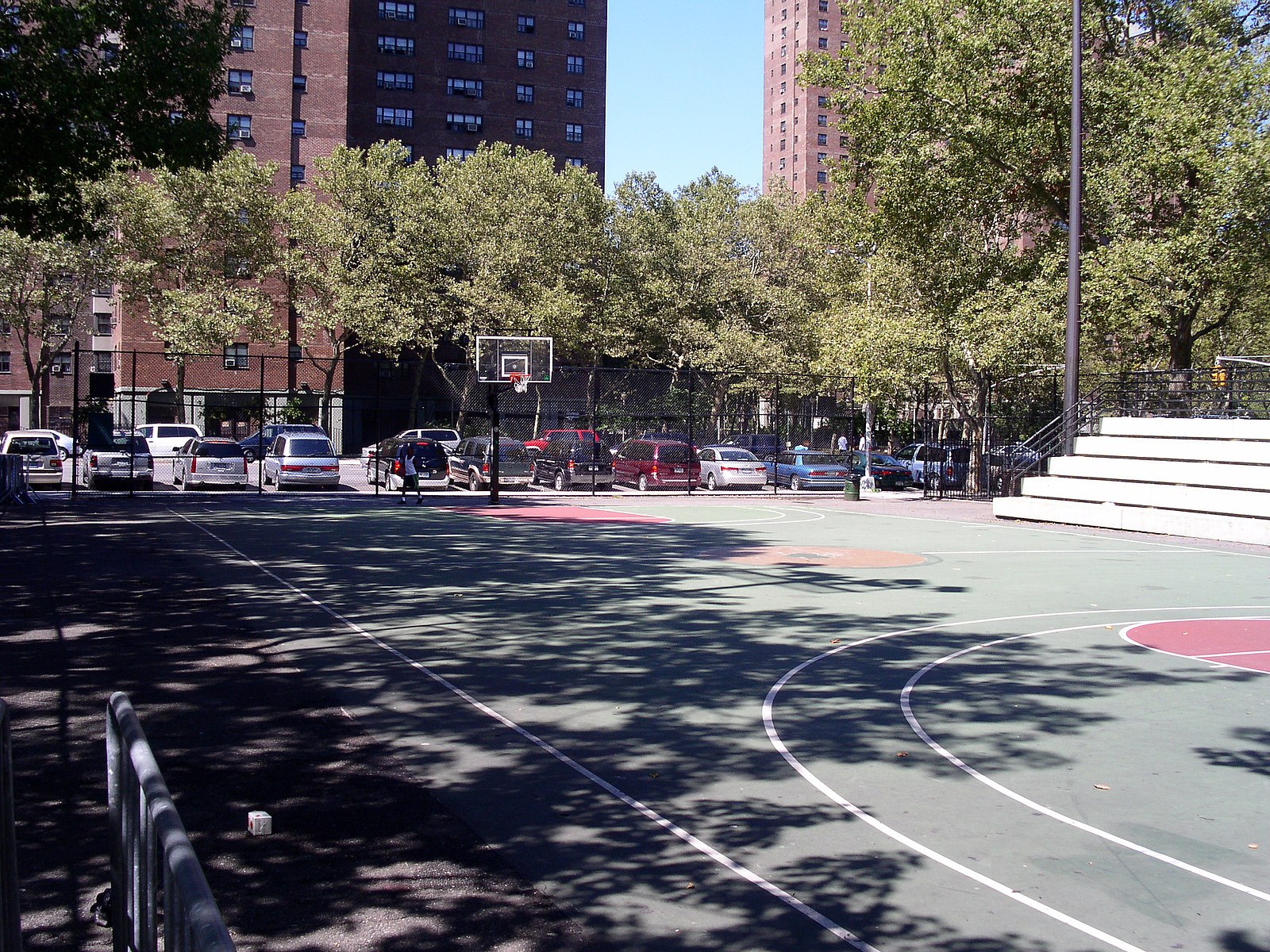
When you think about streetball, Rucker Park is synonymous with legendary players who've made an indelible impact. Icons like Kareem Abdul-Jabbar, Julius "Dr. J" Erving, and Rafer "Skip To My Lou" Alston instantly come to mind. Abdul-Jabbar showcased dominance, Erving mesmerized with aerial artistry, and Alston dazzled with flair. Equally legendary are Nate "Tiny" Archibald, Joe "The Destroyer" Hammond, and Earl "The Goat" Manigault, whose contributions further enrich Rucker Park's storied history.
Attribution: Stefano Brivio, Rucker Park, CC BY 2.0
Rucker Park's Cultural Significance
Rucker Park, established in 1950 in Harlem, NYC, has a cultural influence that extends well beyond its physical location. Renowned as a hub for streetball, it has attracted legends from the basketball community, including Wilt Chamberlain and Julius Erving, who have showcased their skills and creativity in an environment that celebrates flair and spontaneity.
The Entertainers Basketball Classic (EBC) at Rucker Park has solidified the park's reputation as a premier venue for streetball. This tournament draws large crowds and highlights emerging talent, making it a pivotal event in the basketball calendar. The dynamic playing style at Rucker, characterized by its energetic atmosphere, has inspired countless players and influenced professional basketball techniques.
Rucker Park's historical and cultural significance is preserved through various media representations, such as documentaries and films, which underline its contributions to basketball culture and its role in shaping urban basketball. The legacy of Rucker Park endures, showcasing the lasting impact of streetball and the legends who have graced its courts. Whether you are a basketball enthusiast or a casual observer, the allure of Rucker Park is undeniable.
Kareem Abdul-Jabbar

When you think of Kareem Abdul-Jabbar, it's impossible to overlook his beginnings at Rucker Park, where he led Power Memorial Academy to a 71-game winning streak. Known then as Lew Alcindor, his dominance on the court foreshadowed his legendary scoring record in the NBA. His impact at Rucker Park not only showcased his skills but also inspired future generations of basketball players.
High School Dominance
During his high school years, Kareem Abdul-Jabbar, then known as Lew Alcindor, dominated the basketball scene, leading Power Memorial Academy to an incredible 71-game winning streak. His performance earned him the title of 1965 National High School Player of the Year, as he averaged 28.8 points and 16.6 rebounds per game during his senior year. His exceptional skills and athleticism set him apart from other elite players.
At Rucker Park, Abdul-Jabbar's performances solidified his legendary status in streetball culture. He consistently outplayed older, more experienced players, showcasing his dominance and hinting at future greatness. Competing against tough opponents at Rucker Park helped him hone his skills, which later contributed to his NCAA championships with the UCLA Bruins.
Abdul-Jabbar's high school dominance led to national recognition. His remarkable achievements laid the foundation for an illustrious career, with his time at Power Memorial and Rucker Park marking the beginning of his journey to becoming one of basketball's greatest legends.
Legendary Scoring Record
Kareem Abdul-Jabbar's legendary scoring record stands as a monumental achievement in basketball history. Known for his unstoppable skyhook, Kareem amassed an NBA record of 38,387 points, showcasing his scoring prowess over a long, illustrious career. But his legacy isn't confined to the NBA; it also reverberates through the courts of Rucker Park, where he made a significant impact in the world of streetball.
At Rucker Park, Abdul-Jabbar's presence was felt through his dominant performances in legendary games, cementing his status as a streetball icon. Before he even entered the NBA, Kareem was already turning heads with his scoring ability, leading Power Memorial to a 71-game winning streak in high school. His time at UCLA, where he claimed three NCAA championships, only solidified his reputation as a scoring powerhouse.
| Career Milestone | Achievement | Impact |
|---|---|---|
| High School Dominance | 71-game winning streak | Established early dominance |
| Rucker Park Influence | Legendary streetball games | Iconic status in streetball culture |
| NCAA Success | 3 Championships with UCLA | Enhanced scoring reputation |
| NBA Scoring Record | 38,387 Points | All-time leading NBA scorer |
| Legacy and Inspiration | Inspired countless players | Lasting impact on basketball culture |
His scoring prowess and unique playing style have inspired countless players, leaving an indelible legacy at Rucker Park and beyond.
Rafer "Skip To My Lou" Alston
View this post on Instagram
Rafer "Skip To My Lou" Alston's exceptional dribbling and playmaking skills made him a legend at Rucker Park, where his performances in the Entertainers Basketball Classic (EBC) earned him national acclaim. His flashy moves and on-court charisma endeared him to fans and made him a standout in the streetball community. Transitioning to the NBA, Alston demonstrated his vast talent. Drafted by the Milwaukee Bucks in 1998, he proved that a streetball star could excel in professional basketball. Over his 14-year NBA career, he played for multiple teams, including the Orlando Magic, where he was a crucial part of their 2009 NBA Finals run, further cementing his legacy. His streetball prowess was immortalized through the And1 Mixtape Tour, where he showcased his blend of streetball flair and professional-level skills to a broader audience, making him a household name and inspiring many young players. Alston's journey from Rucker Park to the NBA is a testament to talent, perseverance, and enduring impact. Few names resonate in both streetball and professional basketball circles like Nate "Tiny" Archibald. At Rucker Park, Archibald's agility and creativity made him a streetball legend, captivating crowds with his dazzling playmaking and relentless scoring. His performances at this iconic venue elevated the park's status and inspired countless young players to emulate his style. In the NBA, Nate "Tiny" Archibald's impact was equally profound. He became a six-time All-Star and was named the NBA All-Star Game MVP in 1981. Notably, in the 1972-73 season, he led the league in both points, averaging 34.0 per game, and assists, averaging 11.4 per game. His remarkable ability to both score and facilitate made him one of the most dynamic guards in basketball history. Archibald's crowning achievement came in 1981 when he won an NBA championship with the Boston Celtics. His contributions were crucial to the team's success, showcasing his leadership and experience. Recognizing his incredible career, he was inducted into the Naismith Memorial Basketball Hall of Fame in 1991. Nate "Tiny" Archibald's legacy at Rucker Park and in the NBA continues to be celebrated by fans and players alike. Julius "Dr. J" Erving first showcased his exceptional talents at Rucker Park, where his acrobatic dunks and innovative playing style captivated audiences. His flair and skills not only made him a local legend but also revolutionized the game. Dr. J's influence at Rucker Park paved the way for his illustrious career in the ABA and NBA, inspiring countless streetball players and securing his place in basketball history. In the 1970s, Julius "Dr. J" Erving's electrifying presence at Rucker Park redefined streetball and solidified his place among basketball legends. His performances were nothing short of spectacular, showcasing an athleticism that would influence the game for generations. Playing at Rucker wasn't just about winning; it was about leaving an indelible mark on basketball culture. Erving's flair and acrobatic style quickly made him a crowd favorite. Rucker Park wasn't just a venue for Erving; it was a proving ground where his athletic prowess and innovative plays epitomized streetball. His dominance at Rucker significantly contributed to his legendary status and paved the way for his illustrious career in professional basketball. Enchanting audiences with his electrifying acrobatics, Julius "Dr. J" Erving brought a level of creativity and athleticism to Rucker Park that redefined streetball. His impactful playing style, marked by signature moves like the reverse layup and the slam dunk, didn't just entertain; it transformed the game of basketball. Watching Dr. J during those summer league games, you saw a fusion of elegance and raw athletic power that few could replicate. At Rucker Park, Dr. J's performances enhanced the venue's status as a must-see for any serious basketball fan. His ability to captivate crowds with flair and creativity set a new standard for what it meant to be a streetball legend. This wasn't just showmanship; it was a masterclass in blending style with substance. Dr. J's influence on streetball culture can't be overstated. He inspired countless players to approach the game with an artistic mindset, showing that skills honed on the playground could shine on the NBA stage. Through his time at Rucker Park, Dr. J bridged the gap between streetball and professional basketball, forever changing how the game is played. Joe "The Destroyer" Hammond, a name synonymous with streetball excellence, captivated fans with his jaw-dropping scoring prowess, averaging an incredible 40 points per game during his peak at Rucker Park. His scoring ability was unparalleled, and he once dazzled audiences by dropping an astonishing 82 points in a single game. Hammond's choice to dominate the streetball courts over a professional career remains legendary. He turned down a contract with the Los Angeles Lakers, choosing the electrifying atmosphere of Rucker Park instead. This decision solidified his status as a cultural icon in the streetball community. Known for his flashy playing style and unmatched talent, Hammond's influence at Rucker Park is undeniable. Highlights of Joe Hammond's career: Hammond's rivalry with Julius "Dr. J" Erving added another layer to his legacy. This fierce competition and showmanship cement Joe Hammond as one of the greatest streetball players ever. No discussion of Rucker Park legends is complete without mentioning Earl "The Goat" Manigault. Known for his incredible athleticism, Manigault was a streetball icon. His 52-inch vertical leap left crowds in awe and distinguished him as one of the most gifted players to ever grace Rucker Park. His dominant performances, often scoring with ease, made him a staple in streetball lore and earned him a reputation as one of the greatest unknown talents in basketball history. Despite his undeniable skills, Manigault's career faced significant challenges. He received multiple offers to play professionally, but his struggles with addiction limited his opportunities on larger stages. His life's ups and downs were poignantly chronicled in the HBO documentary "Rebound," which highlighted both his extraordinary skills and the personal battles he faced. Manigault's legacy extends beyond the courts of Rucker Park. The establishment of the Earl Manigault Park serves as a memorial to his lasting impact on local basketball culture. Through his standout performances and indelible mark on streetball, Earl Manigault remains a legendary figure whose influence continues to inspire future generations of players.Nate "Tiny" Archibald
Julius "Dr. J" Erving
Early Rucker Park Dominance
Impactful Playing Style
Joe "The Destroyer" Hammond
Earl "The Goat" Manigault
Other notable players include:
Related posts