Los Angeles Lakers' Retired Jersey Numbers: The Legacy of Laker Greats

The Los Angeles Lakers, one of the most iconic franchises in NBA history, have built their legacy on the greatness of individual players and the collective dominance of their teams. For decades, they've honored this greatness by retiring the jersey numbers of their most legendary players—a tradition reserved for only the best of the best. When you look up at the rafters of the Crypto.com Arena (formerly Staples Center), you'll find 12 numbers hanging there, each representing a story of excellence, leadership, and unforgettable moments.
From the early days of George Mikan to the dominance of Kobe Bryant and the Showtime era legends in between, each number is more than just a jersey; it's a symbol of the Lakers' ongoing pursuit of greatness. Let's take a closer look at the tradition of Lakers' retired numbers and the players who earned this rare and prestigious honor.
The Tradition of Retiring Jerseys
The Lakers are selective about which players they choose to honor. Unlike some teams that retired numbers liberally, the Lakers have a strict policy: to be considered, a player must be inducted into the Basketball Hall of Fame and have made significant contributions to the franchise's success. This exclusivity ensures that every retired jersey represents a towering figure in basketball history.
When you compare the Lakers' 12 retired numbers to the Celtics' 23, it's clear that the Lakers take a different approach—one that emphasizes the weight and significance of this tribute. Each jersey retirement isn't just about what a player achieved individually but also how they helped define the franchise's identity and success.
The Golden Era of Centers
If there's one position that defines the Lakers' legacy, it's the center. From George Mikan to Shaquille O'Neal, the Lakers have been home to some of the greatest big men in basketball history.
George Mikan (#99)
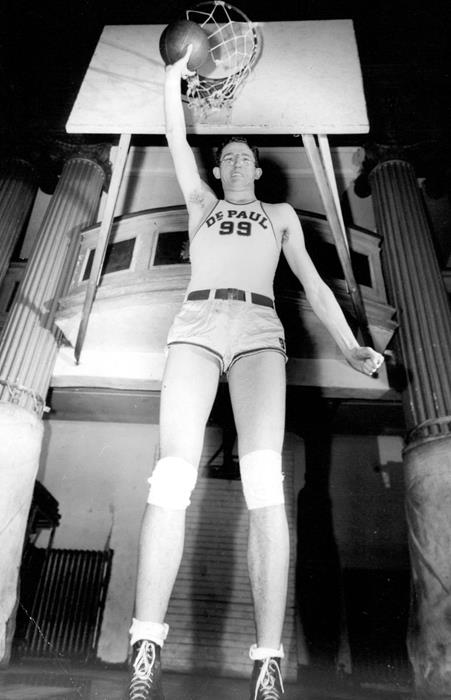
George Mikan is often regarded as the NBA's first true superstar, the player who laid the foundation for professional basketball's rise to prominence. Standing at 6'10", Mikan's dominance in the paint was unprecedented during the 1940s and '50s, a time when basketball was still developing its identity. His trademark hook shot and physical play redefined what a big man could do, earning him the nickname "Mr. Basketball."
Mikan led the Minneapolis Lakers to five championships in six years, firmly establishing the franchise as a powerhouse before its move to Los Angeles. He was also the first player in professional basketball history to score over 10,000 points. Beyond his playing days, Mikan's influence extended to shaping the game itself, as his dominance prompted rule changes like the widening of the lane (known as the "Mikan Rule") to reduce his impact near the basket. His #99 was the first jersey retired by the Lakers, symbolizing the start of a legacy of greatness.
Wilt Chamberlain (#13)
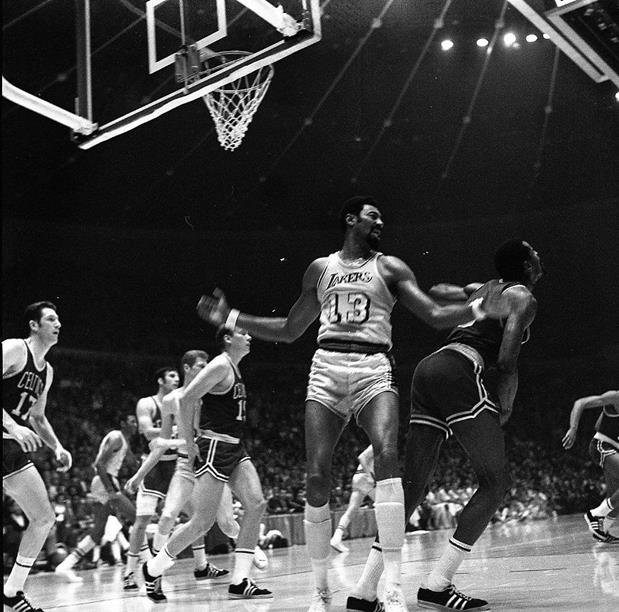
Wilt Chamberlain's arrival in Los Angeles in 1968 brought star power and unparalleled talent to the Lakers. Known for his extraordinary physical gifts and unmatched scoring ability, Wilt's reputation as one of the most dominant players in history was already established before he joined the team. However, it was during his time with the Lakers that he silenced critics who doubted his ability to win championships.
In 1972, Wilt anchored the Lakers to their first title in Los Angeles, breaking the Boston Celtics' stranglehold on the league. That season was historic not just for the championship but also for the team's record-breaking 33-game winning streak, a mark that remains unbroken to this day. Wilt's leadership and rebounding dominance were central to that success, with him famously grabbing 21 rebounds in the title-clinching game.
Kareem Abdul-Jabbar (#33)
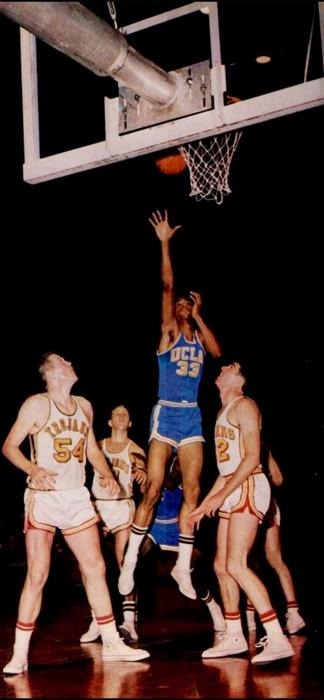
If you want to talk about sustained excellence, Kareem Abdul-Jabbar's name has to be part of the conversation. Over a 20-year career, including 14 seasons with the Lakers, Kareem set records that may never be broken. He remains the NBA's all-time leading scorer with 38,387 points, thanks largely to his signature skyhook—a move so unstoppable it's often called the most effective shot in basketball history.
Kareem's career with the Lakers was marked by consistent brilliance. He won five of his six NBA championships with Los Angeles and added three of his record six MVP awards during his time there. As the anchor of the Showtime Lakers, Kareem provided the steadiness and leadership that complemented Magic Johnson's flash. His dominance extended well into his late 30s, as he continued to contribute at an elite level even as younger stars emerged.
Shaquille O'Neal (#34)
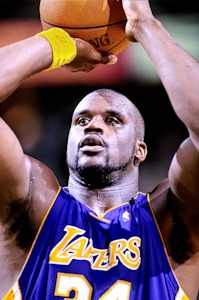

Shaquille O'Neal was the most dominant force in basketball during his prime, and his time with the Lakers showcased his peak. Joining the team in 1996 as a free agent, Shaq turned the Lakers into a championship contender. Alongside a young Kobe Bryant, he led the team to three consecutive NBA championships from 2000 to 2002, earning Finals MVP honors each time.
Shaq wasn't just a player – he was a spectacle. His combination of size, strength, and agility was unlike anything the league had seen. Whether it was his thunderous dunks, his larger-than-life personality, or his penchant for delivering in clutch moments, Shaq was a phenomenon.
Pau Gasol (#16)
When Pau Gasol arrived in Los Angeles via trade in 2008, he was the missing piece the Lakers needed to return to championship form. Gasol's skill set was unique for a big man—his soft touch around the rim, elite passing ability, and high basketball IQ made him a perfect complement to Kobe Bryant. Together, they formed one of the most dynamic duos in franchise history.
Gasol played a pivotal role in the Lakers' back-to-back championships in 2009 and 2010. In the 2010 NBA Finals, his gritty performance against the Boston Celtics—particularly his defense and rebounding in Game 7—was crucial in securing the Lakers' 16th championship. His ability to adapt and excel in high-pressure moments cemented his place in Lakers lore.
Kobe Bryant (#8 and #24)
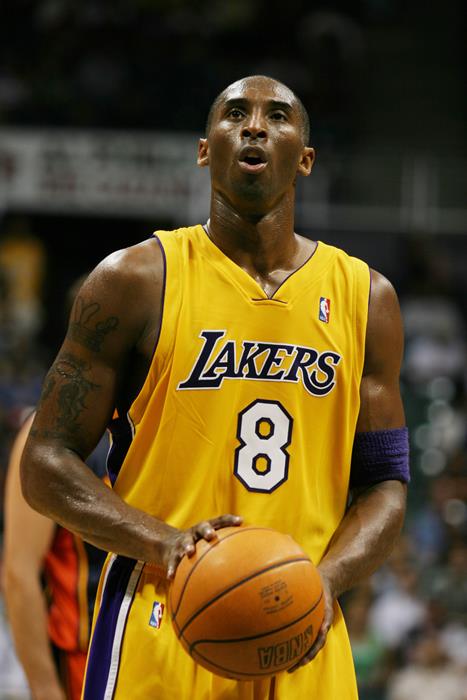
When you talk about Lakers legends, Kobe Bryant's name always comes up. What makes Kobe unique is that he's the only player in franchise history to have two numbers retired—#8 and #24. Both represent distinct chapters of his legendary career.
Kobe entered the league as a brash, high-flying teenager wearing #8. In those early years, he won three championships alongside Shaq, showcasing his scoring ability and relentless drive. But after the team parted ways with O'Neal, Kobe reinvented himself, switching to #24 and becoming the undisputed leader of the Lakers. This version of Kobe led the team to two more championships in 2009 and 2010, earning Finals MVP honors both times.
Retiring both numbers in 2017 was a fitting tribute to a player whose impact on the franchise is immeasurable. #8 represents the fearless young Kobe who took the league by storm, while #24 reflects the mature, battle-tested leader who cemented his legacy as one of the all-time greats.
Showtime Lakers: The Dynasty of the '80s
In the 1980s, the Lakers became synonymous with fast-paced, electrifying basketball—a style dubbed "Showtime." At the heart of this dynasty were three players whose numbers now hang in the rafters.
Magic Johnson (#32)
Magic Johnson was the engine of the Showtime Lakers. In his rookie year, he led the Lakers to an NBA championship, famously playing center in Game 6 of the Finals when Kareem was injured, and earning Finals MVP honors.
Magic's charisma and court vision transformed the Lakers into the most exciting team in basketball. His no-look passes, fast-break orchestration, and ability to play any position made him a nightmare for opponents and a joy for fans. Over the course of his career, Magic won five championships, three MVP awards, and was selected to 12 All-Star Games. Off the court, his infectious smile and larger-than-life personality helped elevate the NBA into a global phenomenon.
Kareem Abdul-Jabbar (#33)
Of course, Showtime wouldn't have been possible without Kareem. While Magic brought the flash, Kareem provided the consistency and dominance inside. Together, they formed one of the greatest duos in NBA history.
James Worthy (#42)
"Big Game James" Worthy earned his nickname for his clutch performances in the postseason. A key member of the Showtime Lakers, Worthy played alongside Magic and Kareem during the team's championship runs in the 1980s. His most memorable moment came in the 1988 Finals, where he delivered a triple-double in Game 7, earning Finals MVP honors.Worthy's combination of size, speed, and skill made him a matchup nightmare.
Early Stars Who Built the Foundation
Before Showtime and Kobe, the Lakers had already established themselves as a powerhouse, thanks to stars like Elgin Baylor, Jerry West, and Gail Goodrich.
Elgin Baylor (#22)
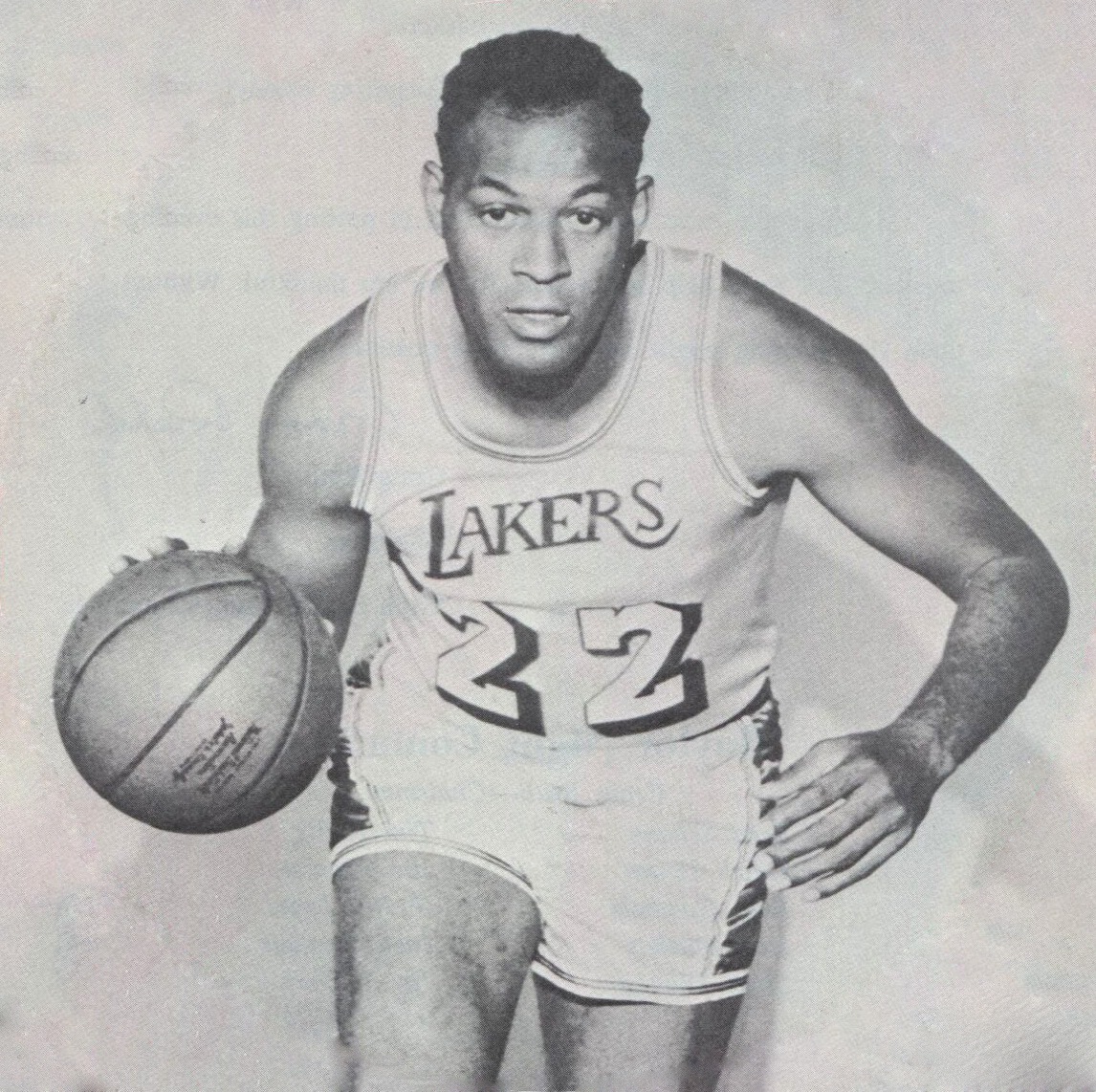
Elgin Baylor was a player ahead of his time. Known for his graceful style and acrobatic scoring, Baylor transformed basketball into a more dynamic and athletic game. During his 14 seasons with the Lakers, he averaged an incredible 27.4 points and 13.5 rebounds per game.
While Baylor never won a championship, his contributions to the game were undeniable. He was an 11-time All-Star and a member of the NBA's 35th, 50th, and 75th Anniversary Teams.
Jerry West (#44)
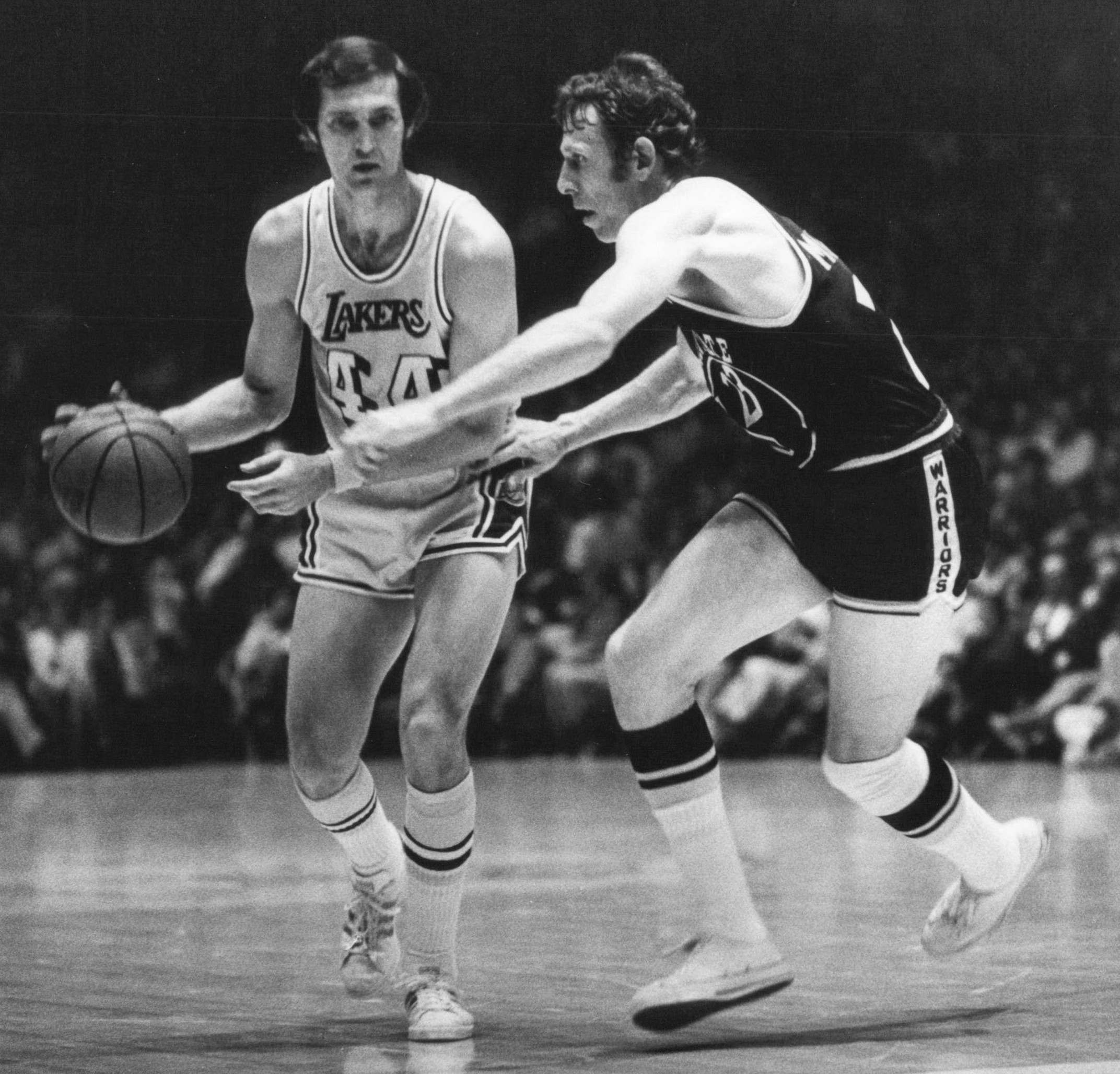
Jerry West's silhouette is literally the logo of the NBA, a fitting symbol for a player who embodied excellence. Known for his deadly jump shot and fierce competitiveness, West was the cornerstone of the Lakers during the 1960s. Over 14 seasons, he averaged 27.0 points per game and was a perennial All-Star.
West's crowning achievement came in 1972 when he finally led the Lakers to a championship after years of falling short. His Finals MVP award in 1969 remains the only one ever given to a player on the losing team, a testament to his incredible performance.
Gail Goodrich (#25)
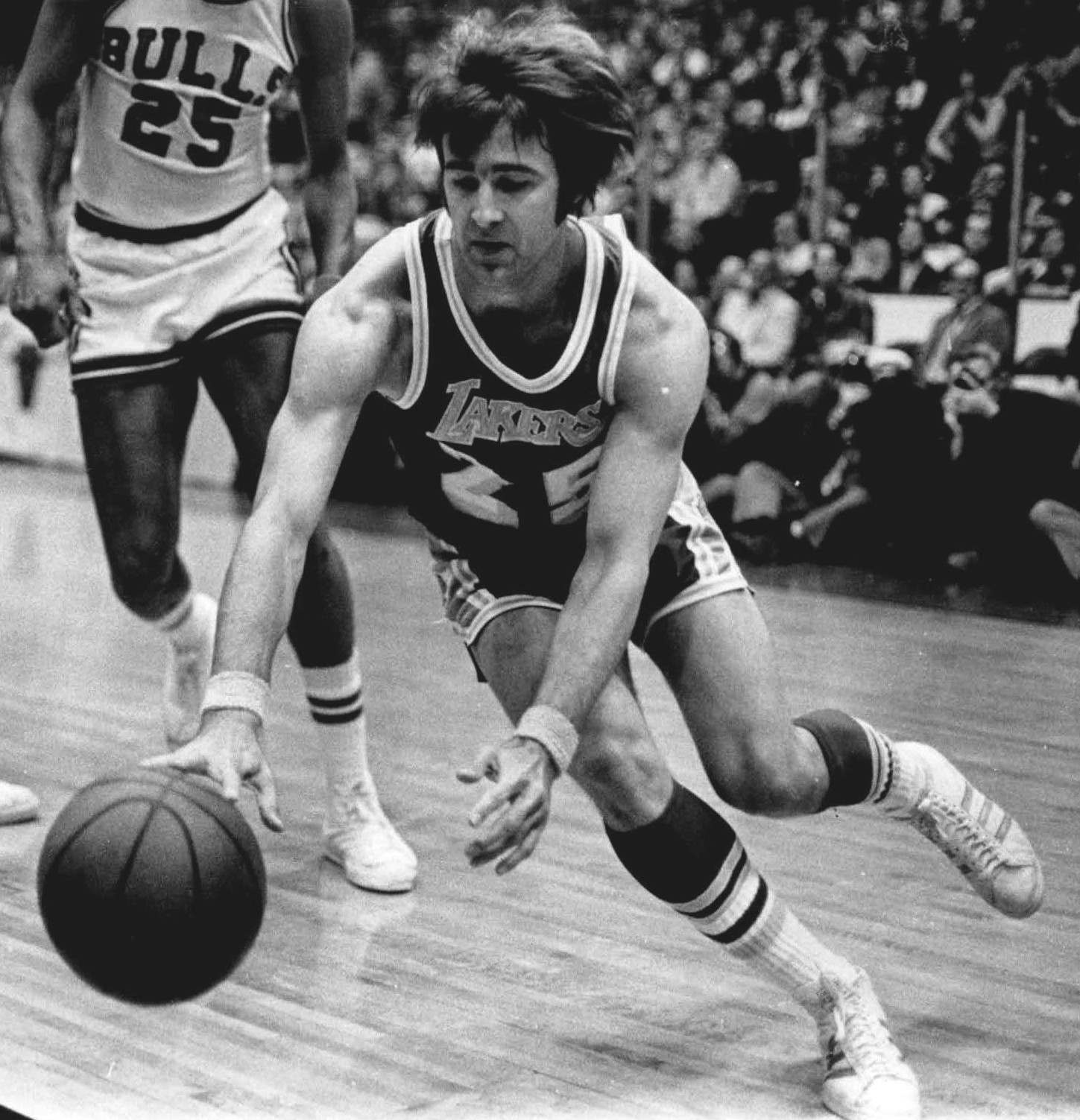
Gail Goodrich might not be as well-known as some of the other Lakers legends, but his contributions during the team's 1971-72 championship season are unforgettable. A silky smooth left-handed guard, Goodrich was one of the team's leading scorers, averaging 25.9 points per game that season and playing a key role in the Lakers' record-setting 33-game winning streak.
Goodrich's ability to create his own shot and his knack for delivering in clutch moments made him an invaluable asset. During the 1972 NBA Finals, his consistent scoring helped the Lakers defeat the New York Knicks and capture their first championship since moving to Los Angeles.
Over his career with the Lakers, Goodrich earned multiple All-Star selections and established himself as one of the league's premier guards. His #25 hangs in the rafters as a tribute to his scoring brilliance and his integral role in one of the greatest teams in NBA history.
Future Retirements for the Los Angeles Lakers
The Lakers' tradition of retiring jerseys is far from over. While the franchise has honored 12 players so far, the next generation of Lakers legends is already making its mark, with some names standing out as surefire candidates for future jersey retirements.
LeBron James
At the forefront of future considerations is LeBron James, whose contributions to the Lakers are already the stuff of legend. Joining the team in 2018, LeBron's impact was immediate. In just his second season, he led the Lakers to their 17th NBA championship in 2020, a victory made all the more significant as it came during the unprecedented circumstances of the NBA's bubble during the COVID-19 pandemic.
LeBron's statistical dominance, leadership, and ability to elevate the team make him a surefire Hall of Famer, which is a prerequisite for the Lakers' jersey retirement tradition. The only question is whether the Lakers will retire his #23, his #6, or potentially both, similar to Kobe Bryant's dual jersey retirement. Each number represents different chapters of his storied career, with #23 tied to his early seasons with the team and #6 marking his championship triumph.
Anthony Davis
.jpg)
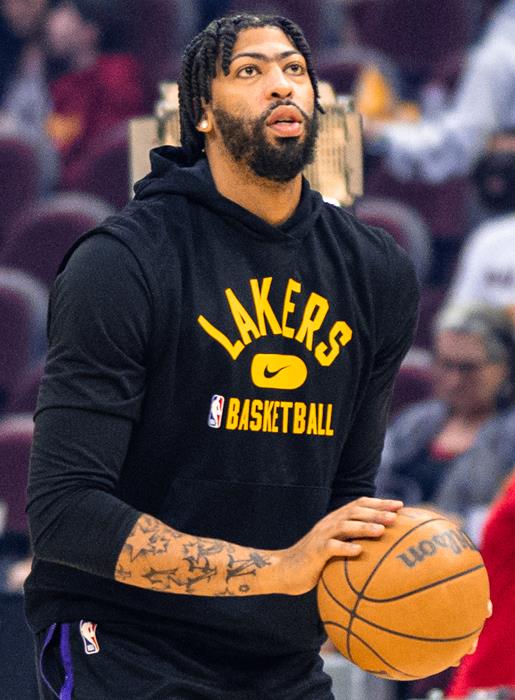
Another strong candidate is Anthony Davis, LeBron's partner during the 2020 championship run. Davis, known for his elite defense, versatility, and scoring ability, has already left a significant mark on the Lakers in just a few seasons. If Davis continues to perform at an All-NBA level and helps the team secure additional championships, his #3 could eventually join the elite group of retired jerseys.
Other Potential Candidates
Beyond LeBron and Davis, other names could enter the conversation depending on their future contributions. Players like Dwight Howard, who played a key role in the 2020 title, and veterans like Russell Westbrook (if his tenure with the team grows in significance) could warrant consideration, though they face stiffer competition given the Lakers' high standards.
A Legacy Worth Celebrating
The Lakers' retired jerseys aren't just about honoring individual players—they're a celebration of the franchise's enduring greatness. Each number tells a story of triumph, sacrifice, and the pursuit of excellence. Together, they form a mosaic of basketball history that continues to inspire players and fans alike. So the next time you're at a Lakers game, take a moment to look up at the rafters and appreciate the legends who made it all possible.
Related posts