When Was FIBA Founded?

FIBA, the International Basketball Federation, was founded on June 18, 1932, in Geneva, Switzerland. This wasn't a random initiative; it involved eight nations—Argentina, Czechoslovakia, Greece, Italy, Latvia, Portugal, Romania, and Switzerland—coming together with a shared vision for the sport. These countries formed the foundation of what would become the global governing body for basketball. Understanding why these nations united and how FIBA evolved from its early days involves exploring its initial challenges and significant milestones.
Founding Date and Place
FIBA, or the Fédération Internationale de Basketball, was officially founded on June 18, 1932, in Geneva, Switzerland. Originally named Fédération Internationale de Basketball Amateur, the organization adopted its current name in 1989. Recognized by the International Olympic Committee (IOC) two years before its founding, FIBA's establishment marked a significant milestone in basketball history.
The eight founding members who convened in Geneva to create this international body were Argentina, Czechoslovakia, Greece, Italy, Latvia, Portugal, Romania, and Switzerland. This event is celebrated as the birth of FIBA, emphasizing its importance and influence in the global sports community.
Initial Member Nations
In June 1932, eight pioneering nations came together to form FIBA: Argentina, Czechoslovakia, Greece, Italy, Latvia, Portugal, Romania, and Switzerland. These nations played an essential role in establishing FIBA as the international governing authority for basketball. By founding FIBA, they set the stage for the global development and standardization of the sport.
Imagine the significance of that moment in Geneva, Switzerland, where representatives from these diverse nations convened to create a unified body for basketball. Their collaboration marked the beginning of FIBA's journey, transforming basketball from a regional pastime into a globally recognized sport. Switzerland, as the birthplace of FIBA, hosted its headquarters, emphasizing its central role in the organization's history.
Each of the founding member nations brought unique perspectives and strengths to the table. Argentina, for instance, had a burgeoning basketball scene, while countries like Italy and Greece had rich sporting traditions. Together, these nations ensured that FIBA was founded on a strong, cooperative foundation. By doing so, they secured FIBA's position as the sole governing authority for basketball, a status further solidified with the Protocol of Stockholm in 1934. Their pioneering efforts continue to influence the sport to this day.
Early Years and Recognition
View this post on Instagram
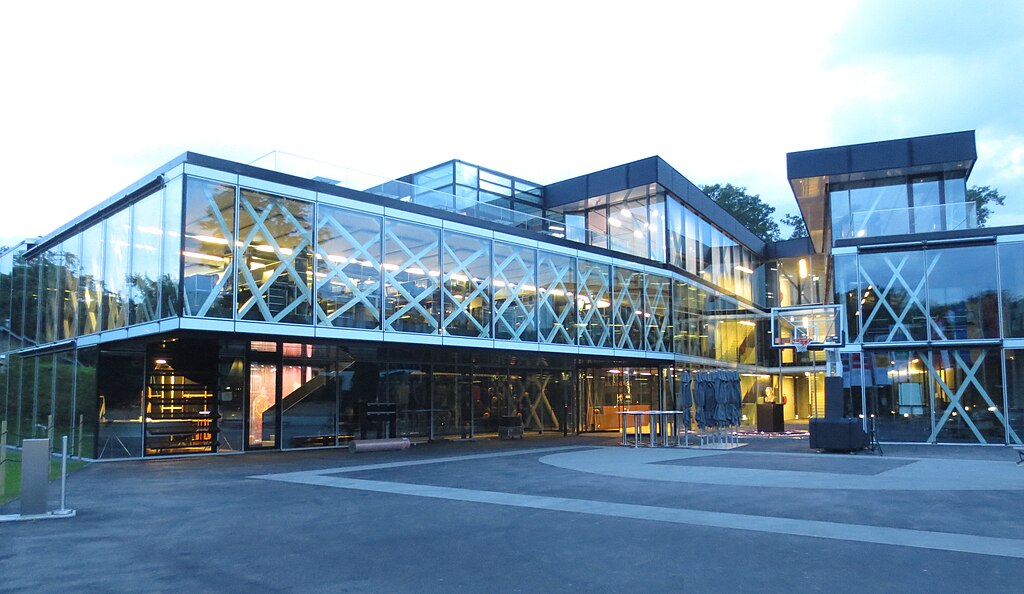
FIBA was founded in 1932 by eight pioneering countries dedicated to advancing the sport of basketball. Just two years later, in 1934, the International Olympic Committee recognized FIBA as the exclusive governing body for basketball, marking a significant milestone that solidified its authority and influence in the sport. FIBA's foundation on June 18, 1932, in Geneva, Switzerland, marked a pivotal moment in basketball history. Eight founding member nations—Argentina, Czechoslovakia, Greece, Italy, Latvia, Portugal, Romania, and Switzerland—united to establish the Fédération Internationale de Basketball Amateur (FIBA). This initiative aimed to oversee the growth of basketball and its international competitions. Each founding nation played a crucial role in shaping FIBA's early policies and direction, laying the groundwork for basketball's inclusion in the Olympic Games and other global events. The Protocol of Stockholm, signed in 1934, further solidified FIBA as the sole governing authority for basketball worldwide, ensuring a unified approach to the sport's global development. This foundation has paved the way for FIBA's enduring influence in the basketball world. Achieving recognition from the International Olympic Committee (IOC) was a fundamental milestone that solidified FIBA's authority in the world of basketball. Founded on 18 June 1932 in Geneva, Switzerland, as the Fédération Internationale de Basketball Amateur, FIBA had already secured IOC recognition two years earlier, in 1930. This early recognition was crucial for establishing FIBA's credibility and influence in amateur basketball. Eight countries—Argentina, Czechoslovakia, Greece, Italy, Latvia, Portugal, Romania, and Switzerland—came together to form FIBA, underscoring the growing global interest in the sport. The IOC's endorsement further validated FIBA's mission and helped it navigate the complex landscape of international sports governance. In 1936, during the Summer Olympics, James Naismith, the inventor of basketball, was named Honorary President of FIBA. This appointment not only honored Naismith but also greatly bolstered FIBA's standing in the global sports community. Initially focused on amateur basketball, FIBA adapted over time. In 1989, it changed its name from "Amateur" to "International Basketball," reflecting the sport's evolution and the changing status of its players, yet retained its well-known acronym, FIBA. FIBA's major competitions have significantly contributed to the global growth of basketball. The Men's Basketball World Cup, established in 1950, and the Women's Basketball World Cup, inaugurated in 1953, have been pivotal. The inclusion of professional NBA players in the Olympics since 1989 has further elevated the level of international competition. The Men's World Cup Inception marked a significant milestone in international basketball competitions. Established by FIBA in 1950, the tournament provided a global stage for countries to showcase their basketball prowess. The inaugural event took place in Buenos Aires, Argentina, where the host nation clinched the first championship title. Initially known as the World Championship, it was rebranded as the FIBA Basketball World Cup in 2014. Held every four years, alternating with the Summer Olympics, the Men's World Cup offers top national teams the chance to compete for international glory. While the tournament's format has evolved, its core mission remains to crown the world's best basketball team. The United States, a powerhouse in international basketball, holds the record for the most titles, having won the championship five times. Key points about the Men's World Cup Inception: Building on the success of the Men's World Cup, FIBA recognized the need for a similar platform for women's basketball. In 1953, they launched the FIBA Women's Basketball World Cup, establishing it as one of the major international competitions for women's sports. The inaugural tournament took place in Chile, with the United States winning the first championship, setting a high bar for future events. Held every four years, alternating with the men's FIBA Basketball World Cup, this tournament rapidly evolved into a prestigious event. It brought together top national teams from around the world, fostering a competitive environment that showcased the growing talent in women's basketball. Over the years, the Women's Basketball World Cup has not only highlighted the skill and dedication of female athletes but also increased the sport's visibility and popularity. In 2018, the tournament was officially renamed the FIBA Women's Basketball World Cup, aligning its branding with the men's competition. This change further cemented its status as a key fixture in international basketball. The Women's World Cup continues to be a cornerstone of FIBA's commitment to promoting and celebrating women's sports on a global scale. How did the landscape of Olympic basketball change with the inclusion of professional players? When FIBA allowed professional athletes to participate in Olympic events starting in 1989, it marked a significant shift in the level of competition. Previously, the Olympics saw only amateur players, limiting the exposure of top talents. The inclusion of professionals enhanced the game, making Olympic basketball more thrilling and competitive. Here are three key changes brought by this decision: This change also influenced the Women's Basketball World Cup, paralleling the men's growth and showcasing top-tier talent on an international stage every four years, alternating with the Olympic Games. Christophe Badoux, FIBA headquarters, CC BY-SA 3.0 FIBA was founded in Geneva, Switzerland, on 18 June 1932, with eight founding member nations. Initially headquartered in Geneva, the organization moved its headquarters to Munich in 1956, a shift that marked a significant milestone in its history by expanding its reach and influence in the basketball world. In 2002, FIBA returned its headquarters to Geneva, reconnecting with its origins. A notable milestone in FIBA's history was the inauguration of the House of Basketball on 18 June 2013, coinciding with its 81st anniversary. Located in Mies, near Geneva, this state-of-the-art facility now serves as the organization's headquarters and a tribute to basketball's rich history. The House of Basketball includes a 1,000 square meter exhibition area dedicated to preserving and promoting the cultural heritage of the sport. FIBA's dedication to celebrating basketball's legacy is evident through its initiatives and the creation of this headquarters. By maintaining a dynamic base of operations, FIBA ensures that the sport's history and culture are honored and passed down to future generations. James Naismith, recognized as the inventor of basketball, played a pivotal role in the sport's international development and the establishment of FIBA. Beyond creating the game, he actively promoted its global growth. Naismith envisioned basketball as an international sport, directly influencing the formation of FIBA in 1932, shortly after basketball's inclusion in the Olympic Games. Naismith's impact extends beyond the creation of a new sport, with his dedication to sportsmanship and fair play laying the foundation for FIBA's rules and regulations. These principles continue to guide the organization today. In recognition of his significant contributions, Naismith was named the Honorary President of FIBA during the 1936 Summer Olympics. James Naismith's major contributions to FIBA and basketball include: Naismith's legacy lives on through the Hall of Fame and numerous initiatives that celebrate his contributions. The evolution of FIBA has been marked by significant milestones that have shaped international basketball. Founded on June 18, 1932, in Geneva, Switzerland, the Fédération Internationale de Basketball began with eight founding members. Originally named the Fédération Internationale de Basketball Amateur, it adopted its current name in 1989 to include professional players. The inaugural FIBA World Championship for men in 1950 set the stage for global competition, enhancing basketball's international presence. A pivotal moment in FIBA's history occurred in 1989 when professional NBA players were allowed to participate in Olympic competitions, significantly elevating the sport's prestige and competitiveness. In 2013, FIBA inaugurated the House of Basketball to commemorate its 81st anniversary, with the aim of preserving and promoting the sport's rich cultural heritage. Key milestones in FIBA's evolution include: These milestones underscore FIBA's ongoing commitment to the growth and celebration of basketball worldwide.Founding Member Nations
Key Contributions of the Founding Member Nations:
IOC Recognition
Major Competitions Established

Men's World Cup Inception
Women's World Cup Origins
Olympic Participation Changes
Headquarters and Milestones
Role of James Naismith
Evolution of FIBA
Year Milestone 1932 Founding of FIBA 1950 First FIBA World Championship 1989 Inclusion of professional players 1989 NBA players in Olympic competitions 2013 Inauguration of the House of Basketball