When Was the First College Basketball Game?

The origins of college basketball are somewhat contested, with multiple institutions claiming to have hosted the first game. Vanderbilt University asserts that the initial game took place on February 7, 1893, against the Nashville YMCA. Meanwhile, Geneva College contends that their game on April 8, 1893, deserves the title. Additionally, the first recognized intercollegiate game occurred between Hamline University and Minnesota A&M on February 9, 1895. These competing claims illustrate the complexity of pinpointing the "first" college basketball game, each contributing uniquely to the sport's early history.
Claims of First College Basketball Game
Several institutions claim to have hosted the first college basketball game. Geneva College and Vanderbilt University both assert they played the pioneering game in 1893, with Geneva's game on April 8 and Vanderbilt's on February 7. Historical records lend credibility to Vanderbilt's claim, as their game against the Nashville YMCA is well-documented.
The first recognized intercollegiate game occurred between Hamline University and Minnesota A&M on February 9, 1895, with Minnesota A&M winning 9-3. This match is noted for being the first played between two colleges, making it a significant milestone in basketball history.
Geneva College's early involvement is evident from an 1892 article where they referred to basketball as "Football in the Gym," indicating their early adoption and promotion of the game. While the University of Iowa also made early contributions, Geneva and Vanderbilt are most prominently discussed.
These conflicting claims highlight the evolving history of college basketball and the contributions of various institutions to the sport's early development.
Geneva College's Historical Context
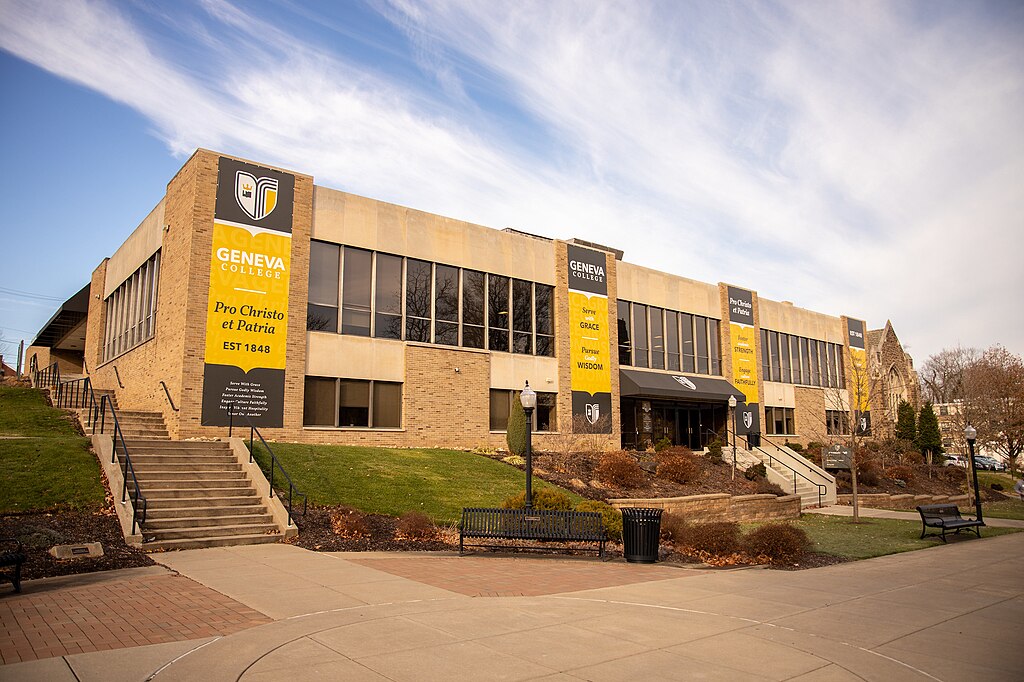
Geneva College played a pivotal role in the early history of basketball, referring to it as "Football in the Gym" back in 1892. An 1893 game against New Brighton, which ended 3-0, highlights their early competitive spirit. Their newspaper frequently covered basketball activities, underlining the sport's growing popularity and Geneva's pioneering influence, with support from Dr. James Naismith himself.
Early Basketball Terminology
In the early days of basketball at Geneva College, the sport was colloquially known as "Football in the Gym," reflecting its physical nature and early development stage. This terminology indicates that basketball was initially perceived as an indoor variant of football rather than a distinct sport. In 1892, an article from Geneva College referred to the game this way, highlighting the rough-and-tumble nature of early basketball.
Curiously, the initial games were quite rudimentary. In 1893, Geneva College played against New Brighton, ending with a low score of 3-0, illustrating the nascent strategies and rules of the time. C.O. Beamis, Geneva's physical education teacher, introduced basketball to the college after witnessing it in Springfield, and his enthusiasm quickly made the sport popular among students.
Dr. James Naismith, the inventor of basketball, even recognized Geneva College's contribution to the sport's early development. The University's engagement with basketball during its formative years, as recorded in their newspaper, underscores the students' early participation and enthusiasm, establishing Geneva as a pioneer in college basketball.
1893 Game Highlights
Geneva College's early involvement in basketball laid a foundational stone for the sport's development. Three key highlights particularly stand out in its historical context.
First, in 1892, Geneva College referred to basketball as "Football in the Gym" in an article. This unique terminology underscored the rough-and-tumble nature of early basketball, setting the stage for its evolution.
Next, an 1893 game between New Brighton and Geneva College ended with a rare score of 3-0. This low-scoring affair highlights the sport's nascent stage, where players struggled with scoring and strategy. It also marks Geneva College's participation in what is considered one of the earliest intercollegiate basketball games.
Lastly, C.O. Beamis, the college's physical director, introduced basketball to students after observing it in Springfield. His initiative made Geneva one of the first colleges to adopt and play the game, an effort later acknowledged by Dr. James Naismith, cementing Geneva's place in basketball history.
| Highlight | Description |
|---|---|
| 1892 Terminology | "Football in the Gym" article |
| 1893 Historic Game | New Brighton vs. Geneva, 3-0 score |
| Physical Director's Role | C.O. Beamis introducing basketball |
| Early Adoption | Among the first colleges to play basketball |
| Naismith's Acknowledgment | Crediting Geneva's pioneering efforts |
Newspaper Documentation Evidence
Geneva College's archival newspapers provide compelling evidence of the institution's early engagement with basketball, firmly rooting its place in the sport's history. A 1892 article referred to basketball as "Football in the Gym," indicating the novelty and experimentation surrounding the sport during its formative years.
By 1893, Geneva College's participation in basketball was well-documented. A newspaper article from that year details a game between New Brighton and Geneva College, ending with a score of 3-0. This early game underscores the college's active role in the sport's development. The extensive coverage in the college's newspaper reflects basketball's growing popularity among students and the local community.
Historical records from Geneva College emphasize its claim as the birthplace of college basketball. Dr. James Naismith, the inventor of basketball, acknowledged the college's pioneering role, lending further credibility to its historical claims. While Iowa also claims to have hosted the initial intercollegiate basketball game, Geneva College's documentation provides substantial evidence of its significant contribution to the sport's early history. These records collectively underscore Geneva College's crucial role in the birth and growth of college basketball.
Vanderbilt University's Contribution
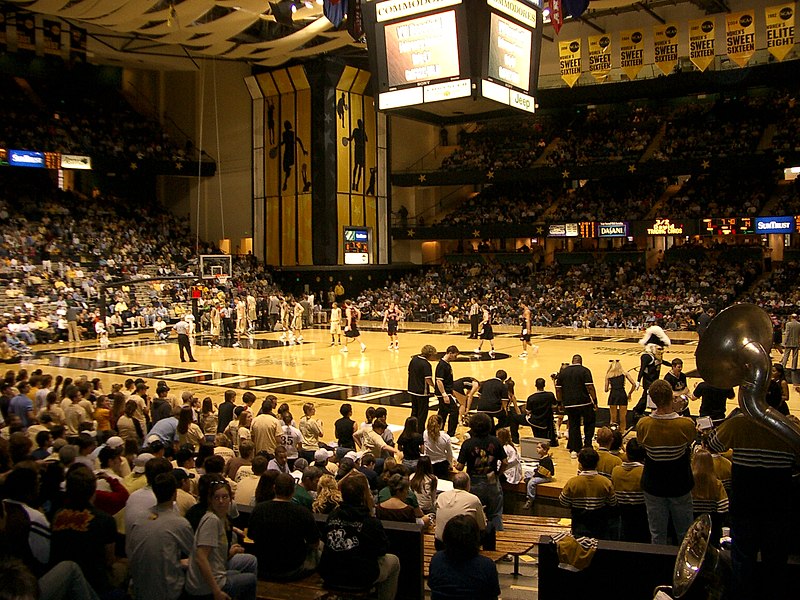
Vanderbilt University's contribution to the early history of college basketball is notable and well-documented. On February 7, 1893, Vanderbilt University competed against the Nashville YMCA in one of the pioneering college basketball games. This historic match played a vital role in the sport's early development.
The game was a public exhibition that drew large crowds, sparking interest in this new sport. Vanderbilt's team won 9-6, showcasing the competitive spirit and skill level of early college basketball.
The university's yearbook from that period commemorates the game, listing players and their positions. A contemporaneous newspaper article also reported on this inaugural game, further validating Vanderbilt's significant role. By participating in this landmark event, Vanderbilt University helped lay the foundation for the widespread popularity and growth of college basketball.
The First Intercollegiate Game
The first intercollegiate basketball game, a landmark event in sports history, took place on February 9, 1895. This inaugural game, between Hamline University and Minnesota A&M, was held in a makeshift court in a basement at Hamline University. The excitement was palpable as nine players from each team squared off, adhering to the original rules established by James Naismith.
In a thrilling, albeit low-scoring contest, Minnesota A&M emerged victorious with a final score of 9-3. This game was more than just about the score; it marked a significant milestone in the evolution of organized college basketball. It set the stage for the sport's future growth and development.
The match between Hamline and Minnesota A&M reflects the early days of basketball, where the passion for the sport began to take root in collegiate settings. This inaugural game was just the beginning, paving the way for a rich history in college basketball.
Evolution of College Basketball
Following the landmark intercollegiate game between Hamline University and Minnesota A&M on February 9, 1895, college basketball began to evolve rapidly. Initially, teams played with nine players each, reflecting the original game designed by James Naismith. However, significant changes soon followed. By January 18, 1896, the University of Chicago faced the University of Iowa in the first game featuring modern five-man lineups, marking a pivotal shift in gameplay.
The excitement generated by these early games spurred the growth of basketball. Universities nationwide began forming teams and competing in intercollegiate matches. As the sport's popularity soared, it led to the establishment of formal tournaments, culminating in the creation of the NCAA tournament in 1939. This tournament introduced a new level of organization and prestige to college basketball, cementing its place in American sports culture.
Here's a quick overview of key milestones:
| Event | Date |
|---|---|
| First intercollegiate basketball game | February 9, 1895 |
| First game with five-man lineups | January 18, 1896 |
| Establishment of the NCAA tournament | 1939 |
These milestones played a crucial role in the rapid evolution of college basketball, transforming it from a simple game into a nationwide phenomenon.
Early Game Rules
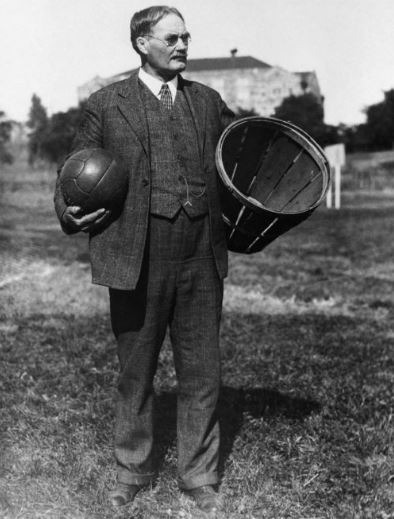
Basketball's early game rules, established by James Naismith in 1891, laid the foundation for the sport's initial structure and gameplay. Each team consisted of nine players, which created a unique dynamic on the court. Players aimed at peach baskets as goals, contributing to a less formalized scoring system.
Unlike today's college basketball, early regulations allowed players to hold the ball for up to five seconds and dribble only twice before passing or shooting. These rules resulted in a distinctive and somewhat primitive version of the game.
The shift to a modern five-man lineup occurred on January 18, 1896, when Chicago defeated Iowa 15-12. This change was pivotal, setting the stage for future developments in the sport. Over time, standardized game durations, player positions, and other rules transformed college basketball into the well-organized sport we recognize today.
Impact and Legacy
Although the primary intercollegiate basketball game in 1895 might seem like a small event, it had a monumental impact on the landscape of college athletics. This crucial college basketball game between Hamline University and Minnesota A&M, ending with a 9-3 score, laid the foundation for the future of intercollegiate basketball. The significance of this match reverberates through time, shaping the structure of organized tournaments and heralding the creation of the NCAA tournament, which has become a cornerstone of collegiate sports.
The legacy of this early game is multifaceted:
- Development of Organized Tournaments: The groundwork laid in 1895 eventually led to the NCAA tournament, a premier event that captures national attention annually.
- Cultural Significance: College basketball's growth has influenced not just athletic programs but also American culture, fostering community spirit and school pride.
- Historical Preservation: The documentation and analysis of these early games allow modern fans and scholars to appreciate the sport's evolution and its ongoing legacy.
The influence of that initial intercollegiate basketball game extends far beyond the court, continuing to resonate in the present college basketball landscape.