Where Was Basketball Invented?
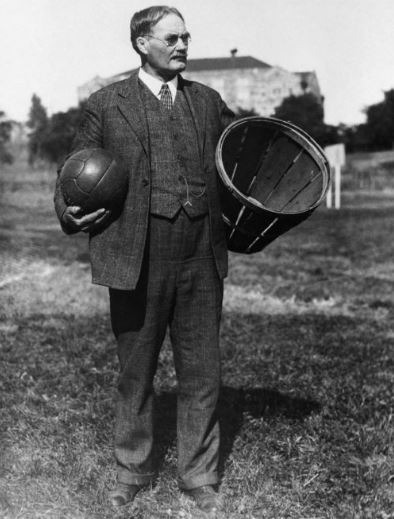
When you think about where basketball was invented, your mind might immediately go to the iconic story of Dr. James Naismith at the YMCA Training School in Springfield, Massachusetts. The game's creation in December 1891 was driven by a need to entertain restless students during winter. Using peach baskets as goals and a soccer ball for the initial game, Naismith's invention quickly gained traction. Curious about how these humble beginnings evolved into a global phenomenon? There's more to uncover about the early rules, gameplay, and the rapid spread of this beloved sport.
The Birth of Basketball
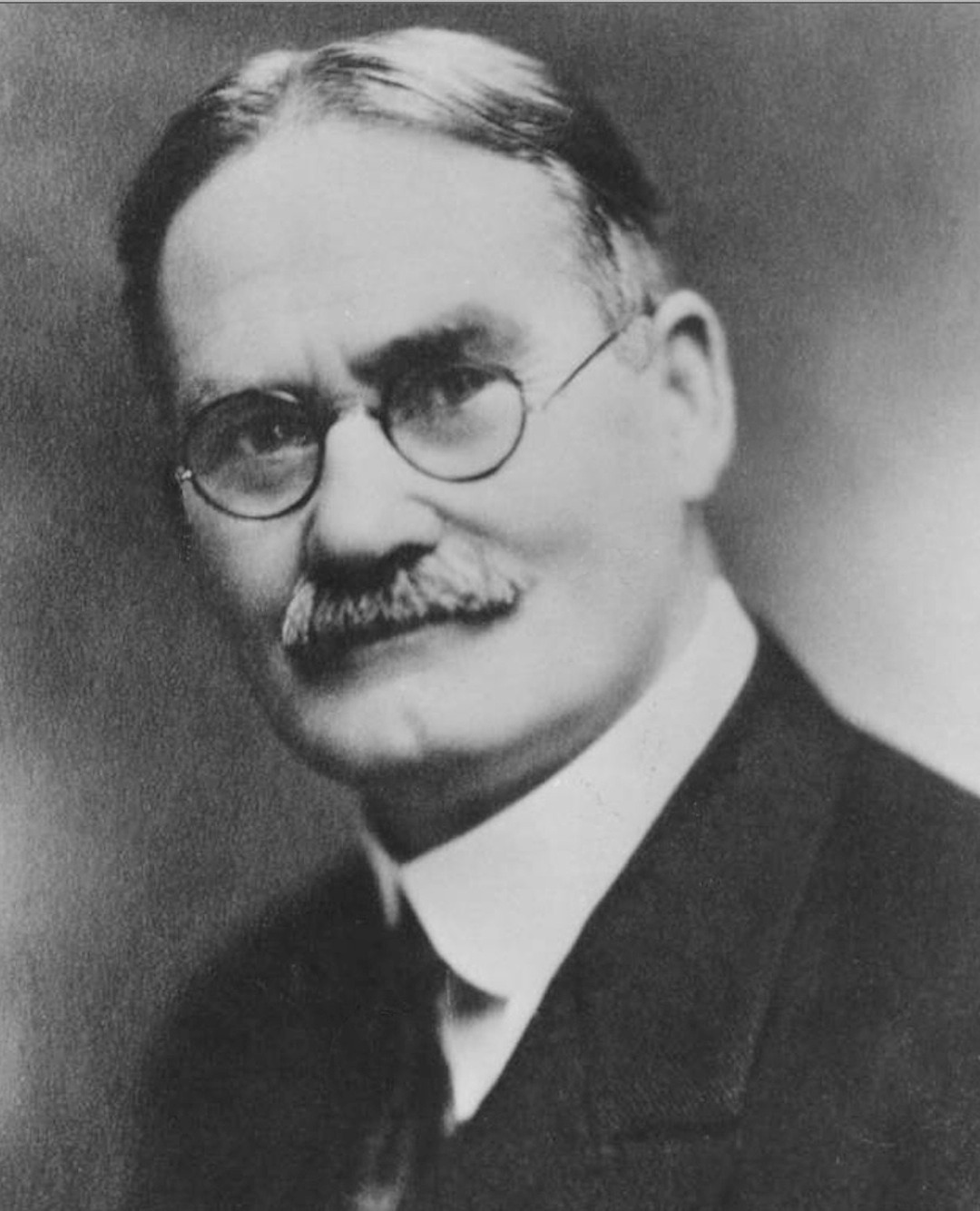
Dr. James Naismith invented basketball as a solution to a pressing problem at the YMCA Training School in Springfield, Massachusetts. In December 1891, he was tasked with finding an engaging indoor activity to keep students active during the harsh New England winters. Naismith designed a game that emphasized safety and minimized physical contact, making it suitable for indoor play.
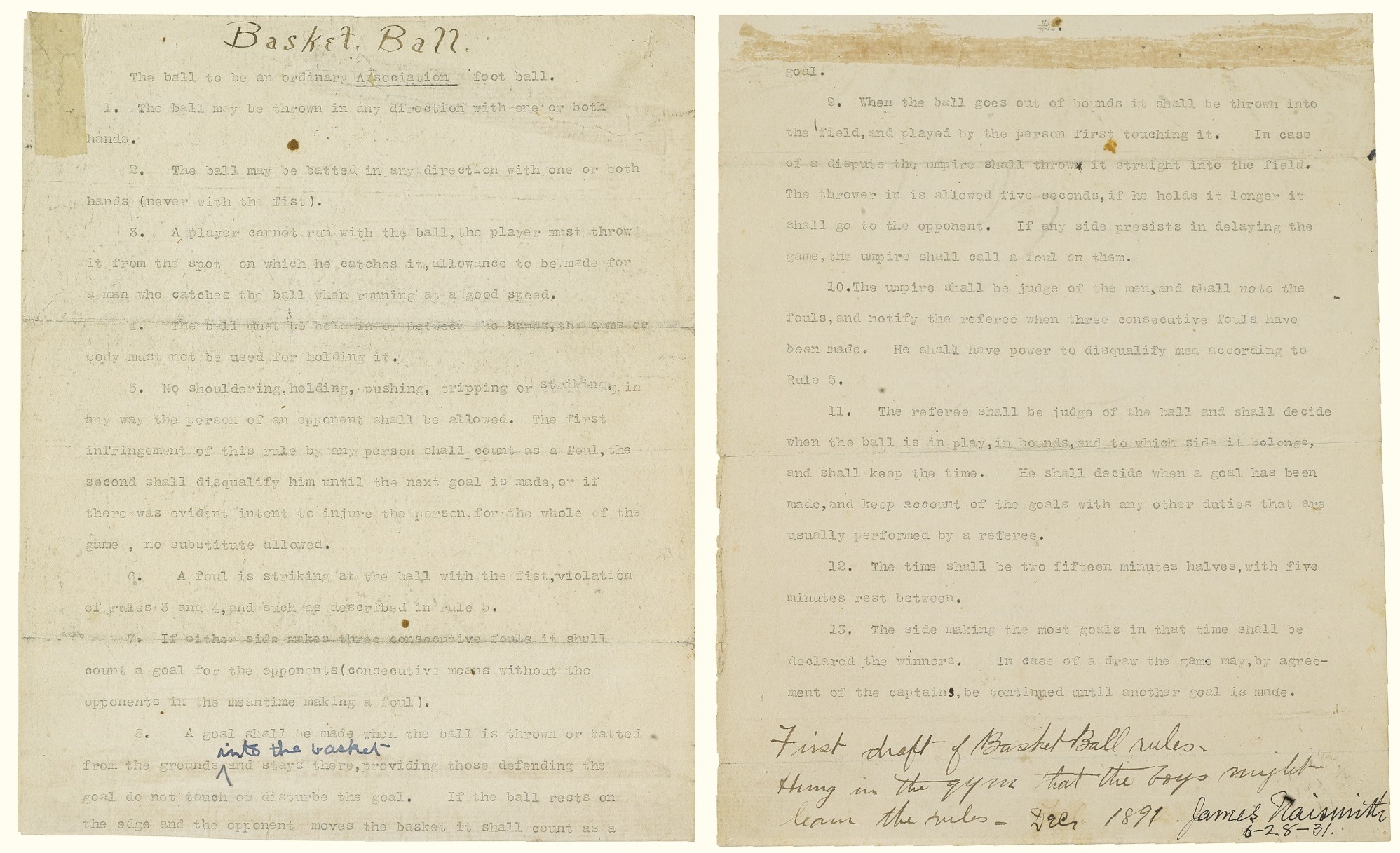
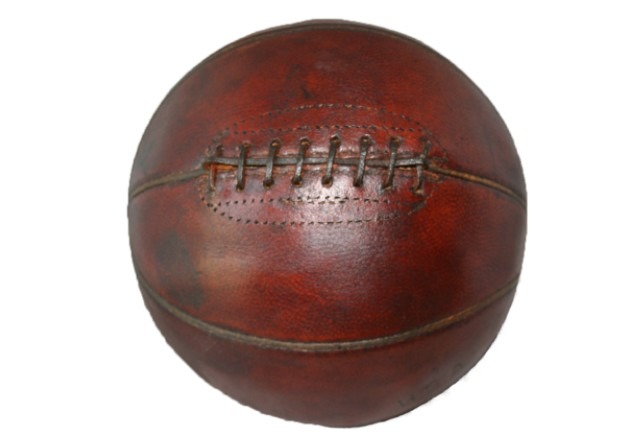
The first organized game of basketball took place on December 21, 1891, featuring two teams of nine players each. Instead of modern hoops, they used peach baskets as goals, and a soccer ball as the basketball. The game was governed by 13 original rules, crafted by Naismith to ensure fair play and maintain the sport's integrity.
Springfield College, home of the YMCA Training School, played a pivotal role in basketball's creation. The sport quickly gained popularity and spread to YMCAs and colleges across the United States. This rapid adoption highlighted Naismith's visionary approach and the universal appeal of the game. By inventing basketball, Dr. James Naismith not only met a local need but also established a foundation for a global sporting phenomenon.
James Naismith's Role
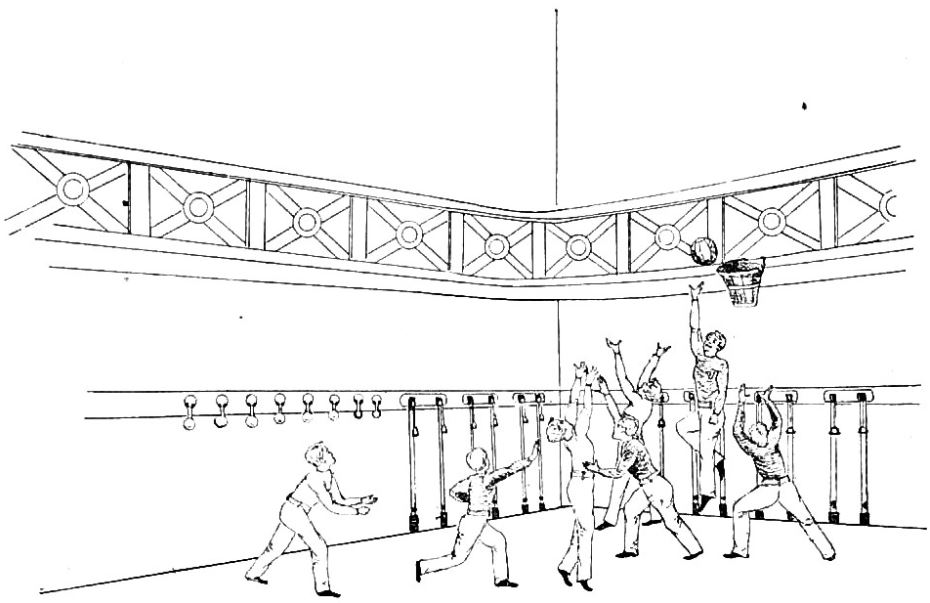
James Naismith's role in the invention of basketball extended well beyond merely creating a new game; he fundamentally shaped its early development and ensured its widespread adoption. As a physical education instructor at the YMCA Training School in Springfield, Massachusetts, Naismith was tasked with designing an engaging indoor activity for students during the harsh winter months. On December 21, 1891, he organized the first game of basketball using a soccer ball and peach baskets as goals.
- Invented basketball to keep students active during winter.
- Developed original rules emphasizing safety and non-violence.
- Initial game involved nine players on each team.
- Aimed to promote fitness and teamwork.
Naismith's original rules laid the groundwork for basketball's structure and gameplay. His innovative approach ensured the game was easy to learn and physically engaging. Drawing inspiration from multiple sports, Naismith crafted an indoor game that emphasized fitness and teamwork. This vision not only led to the creation of basketball but also positioned Springfield College as a pivotal institution in the sport's history. James Naismith's contributions as a physical education instructor at the YMCA Training School were essential in transforming basketball from a simple indoor activity into a global phenomenon.
Early Rules and Gameplay
The early rules and gameplay of basketball, conceived by James Naismith in 1891, established a framework focused on safety and skill. Naismith's original rules emphasized non-violence, requiring players to pass the ball to advance rather than running with it, thereby promoting teamwork and coordination. Scoring was notably challenging, as players aimed to toss the ball into peach baskets mounted high on the gym wall.
Games consisted of two 15-minute halves with a five-minute break in between. Unlike the modern five-player format, original teams had nine players each, creating a crowded and dynamic playing environment. The first official game concluded with a score of 1-0, underscoring the difficulty of scoring and the necessity for precise execution. Initially, players had to manually retrieve the ball from the baskets after each score, until the basket bottoms were eventually removed for efficiency.
Naismith's rules also banned physical contact, ensuring the game prioritized skill and strategy over aggression. These guidelines not only made the game safer but also set the stage for basketball's evolution into a popular and enduring sport.
Spread and Popularity
Basketball's rapid spread after its invention in 1891 can be attributed to the publication of its rules in college magazines and their swift adoption by YMCAs across the United States. The first organized basketball game took place at Springfield College, a pivotal event that accelerated the sport's dissemination. The International YMCA Training School's international student body played a crucial role in introducing basketball to various countries soon after its creation.
By 1905, basketball had gained recognition as a permanent winter sport, reflecting its growing acceptance and institutionalization. The formation of college teams and leagues further fueled its popularity, leading to significant milestones such as its inclusion as an official Olympic sport in 1936. This rapid evolution highlights how quickly basketball spread and became a beloved sport worldwide.
- Springfield College: Birthplace of the first organized basketball game.
- YMCA Adoption: Key to its rapid spread across the U.S.
- Global Introduction: Spread internationally via the YMCA's international students.
- Olympic Recognition: Became an official sport in the 1936 Olympics.
Basketball's journey from a simple game to a global phenomenon is truly remarkable.
Legacy and Impact
While basketball's spread and popularity laid the groundwork, its legacy and impact are even more profound. James Naismith's invention at the YMCA Training School in Springfield didn't just create a new sport; it fostered a rich history and a lasting influence on society. The original rules, published in 1892, set the stage for the game's evolution, emphasizing teamwork and strategic play. These 13 guidelines have largely endured, showcasing the sport's solid foundation.
Springfield College, where it all began, continues to honor basketball's legacy through its commitment to leadership and service. The Humanics philosophy, promoting the balanced development of spirit, mind, and body, aligns perfectly with the principles Naismith envisioned. Future leaders in sports and education are molded here, ensuring the sport's values live on.
The Naismith Memorial Basketball Hall of Fame, also located in Springfield, stands as a monument to the sport's profound influence. With over 450 inductees, it preserves and promotes basketball's history, attracting nearly 200,000 visitors annually. This institution not only celebrates the game's past but also inspires future generations, cementing basketball's enduring heritage. Through these efforts, the impact of basketball reaches well beyond the court.