How Do Basketball Coaches' Use of Technology for Performance Improvement?

As a basketball coach looking to elevate your team's performance, cutting-edge technology offers numerous tools to achieve this goal. Wearable devices provide real-time data on players' heart rates and recovery levels, enabling you to optimize training sessions effectively. Performance tracking software highlights individual strengths and weaknesses, while motion analysis tools help detect potential injury risks. Virtual reality training simulates high-pressure scenarios, enhancing players' mental resilience. Curious about how these technologies can transform your coaching strategies and improve your team's overall effectiveness? Let's explore further.
Data-Driven Training
How has technology transformed basketball training? It has revolutionized player development through data-driven methods. Wearable technology like fitness trackers and heart rate monitors enables coaches to collect real-time data on players' heart rates, calories burned, and recovery metrics. This information facilitates the creation of tailored training programs that enhance individual performance and help prevent injuries.
Data analysis tools such as Velocity-Based Training (VBT) allow coaches to monitor key performance metrics like power output and velocity. These tools help in adjusting training intensity and managing fatigue levels effectively. Performance tracking software provides insights into athletes' strengths and weaknesses, enabling coaches to make informed decisions for targeted skill development and injury prevention.
Performance Monitoring
Performance monitoring technology has become indispensable for basketball coaches aiming to enhance team success. Wearable fitness trackers now enable the tracking of key metrics like heart rate, distance covered, and calories burned. This data provides a comprehensive understanding of each player's physical workload during practices and games.
Motion analysis software allows for detailed assessment of an athlete's form and technique. By examining motion patterns, inefficiencies and areas for improvement can be identified, helping to elevate performance and prevent issues before they arise.
Velocity-Based Training (VBT) is another innovative method available. By measuring the velocity at which an athlete performs exercises, training intensity can be adjusted based on individual readiness and fatigue levels. This ensures that each player trains at their optimal intensity, enhancing overall performance.
To interpret all this data, data visualization tools are invaluable. They present performance metrics and trends in an easily understandable format, allowing for informed decisions about training plans and game strategies.
- Wearable fitness trackers monitor physical workload.
- Motion analysis software helps assess form and technique.
- Velocity-Based Training adjusts training intensity.
- Data visualization tools present metrics and trends effectively.
This integrated approach to performance monitoring enables the tailoring of strategies, ensuring the team performs at its best.
Injury Prevention
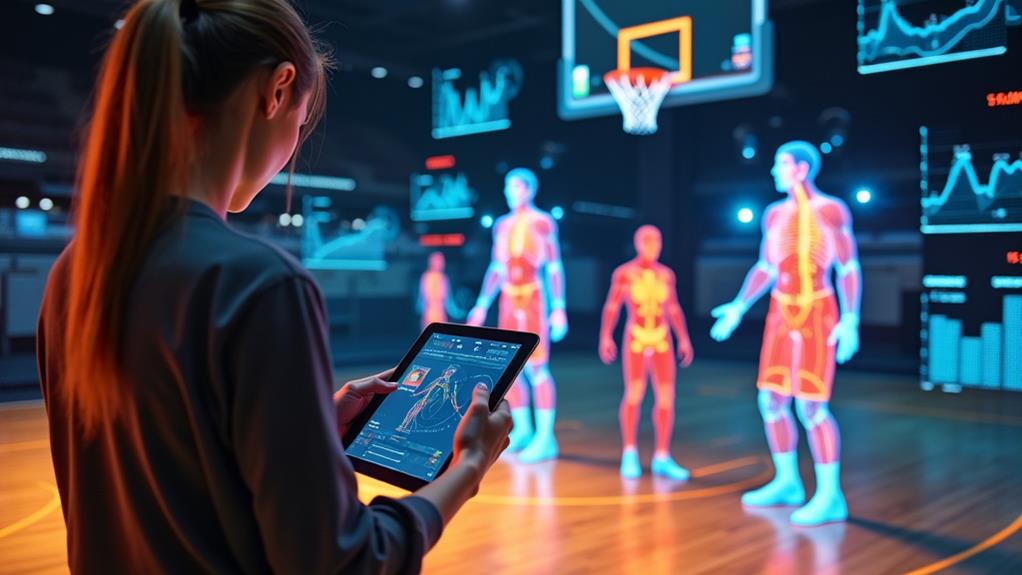
Injury prevention has become a cornerstone of modern basketball coaching, thanks to advancements in technology. By leveraging motion analysis software, coaches can identify and correct form and technique issues in their players, significantly reducing the risk of injuries during practices and games. This technology helps coaches pinpoint potential problems before they escalate.
Additionally, monitoring player workload through advanced systems can prevent overuse injuries and ensure athletes are adequately prepared for training and competition. Data-driven insights enable informed decisions regarding athlete health and safety, creating a safer return-to-play environment after injuries. For example, using the KINEXON PERFORM IMU system, coaches can evaluate accumulated load to inform recovery and nutrition protocols, ultimately enhancing player performance.
Research indicates that employing data-driven strategies can reduce knee injuries by up to 20%, highlighting the importance of technology in injury prevention efforts in basketball. By integrating these technological tools, coaches can optimize athlete performance while minimizing injury risks.
| Technology | Purpose | Benefit |
|---|---|---|
| Motion Analysis | Identify form issues | Reduced risk of injuries |
| Workload Monitoring | Prevent overuse injuries | Adequate training preparation |
| KINEXON PERFORM IMU | Evaluate accumulated load | Improved recovery protocols |
Effectively using technology can transform how coaches manage and prevent injuries, leading to a healthier, more efficient team.
Mental Preparation
As a coach, you can utilize virtual reality technology to simulate high-pressure game scenarios, aiding your athletes in honing decision-making skills and reducing anxiety. Visualization techniques allow players to mentally rehearse these situations, enhancing their mental readiness. Together, these tools ensure your team is both physically and mentally prepared for any challenge on the court.
Virtual Reality Training
Virtual reality (VR) training has become a powerful tool for preparing basketball players for the mental demands of the game. By simulating competitive scenarios, players can practice decision-making and skill execution in high-pressure environments without the physical risks associated with real games. This repeated exposure not only enhances situational awareness but also builds mental resilience, helping players better cope with anxiety and stress during actual competitions.
Key benefits of VR training include:
- Improved Decision-Making: Enhance rapid decision-making skills in simulated game situations.
- Enhanced Mental Resilience: Develop the ability to handle pressure and stress effectively.
- Personalized Feedback: Receive customized performance analysis to target specific needs.
- Heightened Confidence: Build confidence and focus through repeated game-like experiences.
Research indicates that athletes using VR training report increased confidence and improved focus during games, leading to better on-court performance. Coaches can tailor VR sessions to provide personalized feedback and performance analysis, ensuring athletes work on their unique areas for improvement. By incorporating VR technology into your training regimen, you can elevate your game both mentally and physically, preparing for the demands of high-level competition.
Visualization Techniques Usage
Virtual reality training offers tangible benefits for building mental resilience and decision-making, but visualization techniques provide another powerful avenue for mental preparation. By utilizing visualization techniques, athletes can mentally rehearse game scenarios, enhancing their ability to perform under pressure during actual competitions. These exercises encourage players to see themselves successfully executing plays, boosting their confidence and overall performance.
Incorporating visualization techniques into practice routines fosters a mindset focused on goal attainment and resilience. This mental training helps athletes improve their focus and reduce pre-game anxiety, leading to better performance outcomes. Imagine players visualizing themselves making a game-winning shot or flawlessly executing a defensive strategy. This mental rehearsal prepares them to face high-stress situations in real games with confidence and poise.
Research indicates that athletes who regularly engage in visualization techniques show notable improvements in decision-making skills. They become adept at quickly evaluating game situations and making the best choices under pressure. By integrating these techniques, coaches enhance not just physical skills but also the mental fortitude needed for competitive success.
Recovery Optimization
Optimizing recovery is essential for basketball coaches dedicated to maintaining their players' peak performance. By integrating advanced technology, you can significantly enhance your team's recovery process, ensuring they are always ready for the next game.
Wearable devices have revolutionized recovery tracking. These tools monitor key metrics such as heart rate variability and sleep patterns, offering real-time insights into each player's physical condition. This data helps customize recovery protocols after games and practices.
Data-driven performance tracking is another critical asset. By analyzing historical performance data, you can identify the most effective recovery strategies and make informed adjustments to training regimens. This ensures players are adequately rested and prepared for future competitions.
Readiness assessments using tools like force plates allow you to evaluate an athlete's recovery status accurately. This enables you to adjust training loads effectively, preventing overtraining and reducing injury risks.
Consider incorporating these recovery optimization methods:
- Cryotherapy and compression boots: Reduce inflammation and accelerate muscle recovery.
- Heart rate variability tracking: Provide insights into recovery status for customized protocols.
- Readiness assessments: Use force plates to modulate training loads.
- Performance tracking: Analyze data to determine optimal recovery strategies.
Implementing these technologies into your recovery regimen will keep your team in top condition.
Athletic Training Innovations
To enhance your team's training regimen, consider incorporating wearable fitness trackers, motion analysis software, and virtual reality training. These advanced tools deliver real-time data, detailed movement analysis, and immersive practice scenarios, helping athletes achieve peak performance. By integrating these technologies, you can develop more effective, personalized training programs that improve skills and reduce injury risks.
Wearable Fitness Trackers
With the advent of wearable fitness trackers, basketball coaches can now monitor vital metrics such as heart rate, calories burned, and sleep patterns, providing invaluable insights for crafting effective training and recovery strategies. These devices empower coaches to make data-driven decisions, allowing them to track athletes' fatigue levels and readiness for training. This optimizes the intensity and volume of workouts, ensuring each session is tailored to individual needs.
Wearable fitness trackers facilitate the collection of performance data during practices and games. By analyzing this data, coaches can pinpoint specific strengths and weaknesses, enabling targeted skill development. This personalized feedback helps athletes improve rapidly and effectively.
Here's how wearable fitness trackers enhance your coaching strategy:
- Monitor Workload: Prevent injuries by tracking athletes' overall workload and adjusting training programs accordingly.
- Optimize Recovery: Use sleep and recovery data to ensure athletes are well-rested and ready for peak performance.
- Individualize Training: Tailor workouts to each athlete's unique needs, boosting overall team performance.
- Real-Time Adjustments: Make immediate changes based on real-time data, improving decisions during practices and games.
Motion Analysis Software
Motion analysis software, utilizing high-speed cameras and 3D motion capture systems, equips basketball coaches with detailed insights into player movements. This technology helps identify and rectify technical flaws that affect performance by analyzing data on gait cycles, shooting mechanics, and defensive stances. These data-driven insights enable coaches to adjust training regimens to enhance player efficiency and effectiveness on the court.
The software tracks specific metrics such as shooting angles and release times, allowing for personalized training plans. Implementing motion capture systems during practice sessions can significantly reduce the risk of injury by ensuring athletes maintain proper form, thereby minimizing overuse injuries. Additionally, coaches can generate comprehensive reports to monitor progress over time, aiding informed decision-making in game strategies and player development.
| Metric | Benefit to Coaches |
|---|---|
| Gait Cycles | Improve player agility and movement |
| Shooting Angles | Enhance shooting accuracy |
| Release Times | Optimize shooting speed and form |
| Defensive Stances | Strengthen defensive techniques |
| Injury Prevention | Maintain proper form, reduce overuse injuries |
Using motion analysis software, coaches can track progress and make informed choices to elevate performance and training outcomes. This tool translates complex movements into actionable insights, advancing overall game strategy and individual player development.
Virtual Reality Training
Virtual reality training has revolutionized how basketball coaches prepare their players for high-pressure game scenarios. By immersing athletes in simulated environments, coaches can enhance decision-making skills without the physical risks of live games. This innovative technology is reshaping player development strategies.
- Enhances decision-making skills under pressure
- Boosts mental resilience and confidence
- Enables customized training strategies
- Elevates overall court performance
When players engage in VR training, they face high-stakes situations that build mental resilience and confidence—critical traits for real competitions. Coaches can analyze players' mental and physical responses to various scenarios, gaining insights to develop individualized training plans. This personalized approach ensures each player receives the specific guidance needed to excel.
Advanced VR systems also allow coaches to simulate specific plays or defensive strategies, enabling players to practice and refine their skills in a controlled environment. Research indicates that incorporating VR training into practice routines enhances spatial awareness and reaction times, thereby improving overall performance. Embrace virtual reality training to elevate your team's game.
Motion Analysis
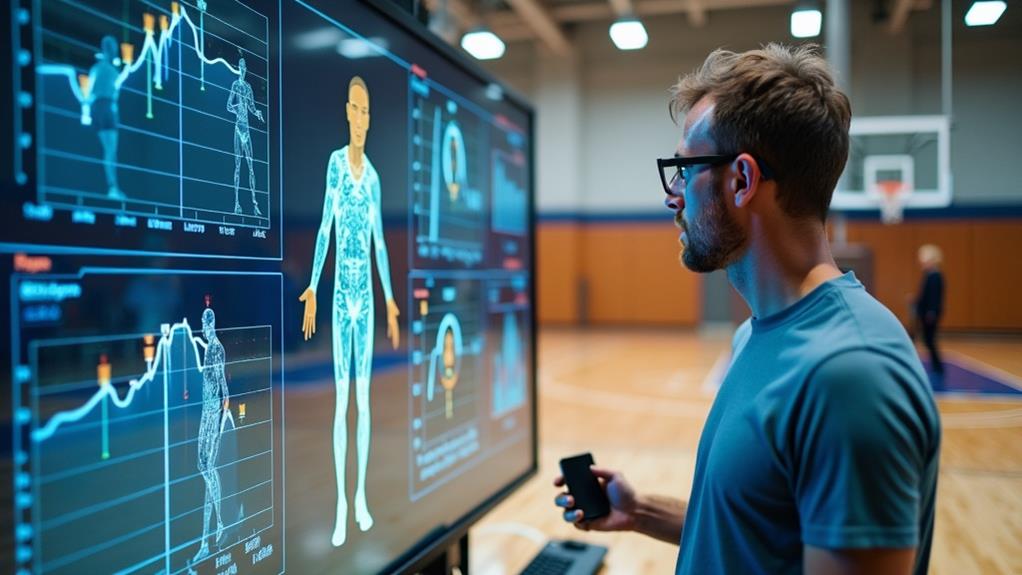
In the realm of basketball coaching, a field that seamlessly blends art and science, motion analysis technology emerges as a transformative tool. Utilizing high-speed cameras and 3D motion capture systems allows for detailed assessments of athletes' movements, enabling precise evaluations of technique and performance.
Motion analysis facilitates the dissection of gait cycles, shooting forms, and defensive stances, identifying specific areas for improvement. This leads to more efficient and effective training sessions. Crucially, it also plays a vital role in reducing injury risks. By identifying improper biomechanics early, necessary adjustments can be made to athletes' movements, preventing potential injuries.
Moreover, the data gathered from motion analysis can be seamlessly integrated into personalized training programs. This ensures that each athlete focuses on their individual weaknesses, optimizing overall performance. Continuous use of motion analysis offers objective feedback, making training sessions and game preparations more data-driven, ultimately enhancing player performance on the court. Embrace motion analysis to elevate your coaching to new heights.
AI and Machine Learning
Leveraging advanced technologies in basketball coaching extends beyond motion analysis. AI and machine learning are revolutionizing performance improvement by analyzing vast datasets to identify patterns in player performance and make data-driven decisions. Here's how these technologies can enhance your coaching:
- Predict Injury Risks: AI evaluates player workloads and movement patterns to predict potential injuries, enabling you to tailor training regimens to minimize risks.
- Optimize Game Strategies: Machine learning models analyze opponent tendencies and player matchups, enhancing in-game decision-making.
- Real-time Feedback: AI-driven tools provide instant feedback during practices, allowing for immediate adjustments to drills and techniques.
- Personalized Training Plans: AI creates personalized training plans, addressing each athlete's strengths and weaknesses for comprehensive team improvement.
Imagine a system that continuously evaluates player data, predicting injury risks before they arise. Machine learning optimizes game strategies by analyzing opponent tendencies in detail. Real-time feedback ensures you are always informed during practice, while personalized training plans guarantee each player receives the attention they need. Adopt AI and machine learning to elevate your coaching to the next level.