
What Are the Primary Offensive Strategies in Basketball?
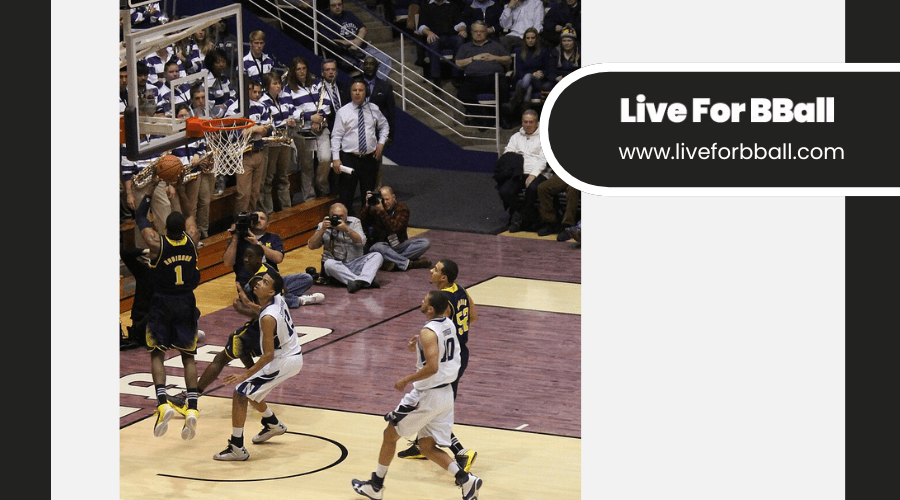
TonyTheTiger, 20130103 UofM fast break (4), CC BY-SA 3.0
Developing a strong basketball offense involves several key strategies. Motion offense relies on continuous movement and adaptability to create scoring opportunities, while structured offenses depend on predetermined plays and patterns. Fast break offenses aim to capitalize on quick transitions, and hybrid offenses blend multiple approaches for versatility. The dribble-drive offense emphasizes spacing and penetration. Each strategy has unique strengths and challenges, so it's essential to choose one that aligns with your team's style and capabilities.
Motion Offense
Motion offense in basketball goes beyond memorized plays; it empowers players to make real-time decisions and adapt to the defense. This strategy emphasizes constant movement and proper spacing, ensuring active involvement from all players. Consequently, it creates mismatches and scoring opportunities that keep the defense guessing.
Implementing a motion offense requires players to have a high basketball IQ. They must read defenses and react quickly, using screens and cuts to exploit weaknesses. Unlike structured plays, this approach relies on decision-making, making it harder for opponents to scout and predict. Instead of running set plays, players respond to the defense's actions.
Different forms of motion offense, such as the 5-Out, 4-Out 1-In, and 3-Out 2-In, are tailored to the team's strengths and strategy. Adapting these setups keeps the defense on its toes and allows more effective reactions. By mastering this fluid and dynamic approach, your team can become an unpredictable and formidable offensive force.
Structured Offenses
In the context of structured offenses, basketball teams benefit from well-defined plays that leverage repetitive actions and established patterns to create scoring opportunities. A continuity offense focuses on repetitive player movements and actions, such as the Wheel and Shuffle offenses, to generate consistent scoring chances. This approach emphasizes ball movement and spacing, ensuring players are always in optimal positions.
A set play offense involves pre-designed plays tailored for specific game situations. Examples like the UCLA and Triangle Post offenses are designed to exploit defensive weaknesses effectively. These plays often rely on precise execution and timing, utilizing screens and player rotations to create open shots.
When facing zone defenses, a zone offense becomes essential. This strategy emphasizes ball movement and spacing, creating open shots through quick decision-making and effective outside shooting. Effective zone offenses can dismantle even the toughest zone defenses.
The Flex offense is a positionless approach that emphasizes player rotation and movement. It generates opportunities for layups and post-ups through a series of screens and cuts, making it challenging for defenses to keep up.
Lastly, the high-low offense capitalizes on both high and low post players to create scoring options. This approach is particularly effective against zone defenses and requires strong communication and passing skills among teammates to succeed.
Fast Break Offense
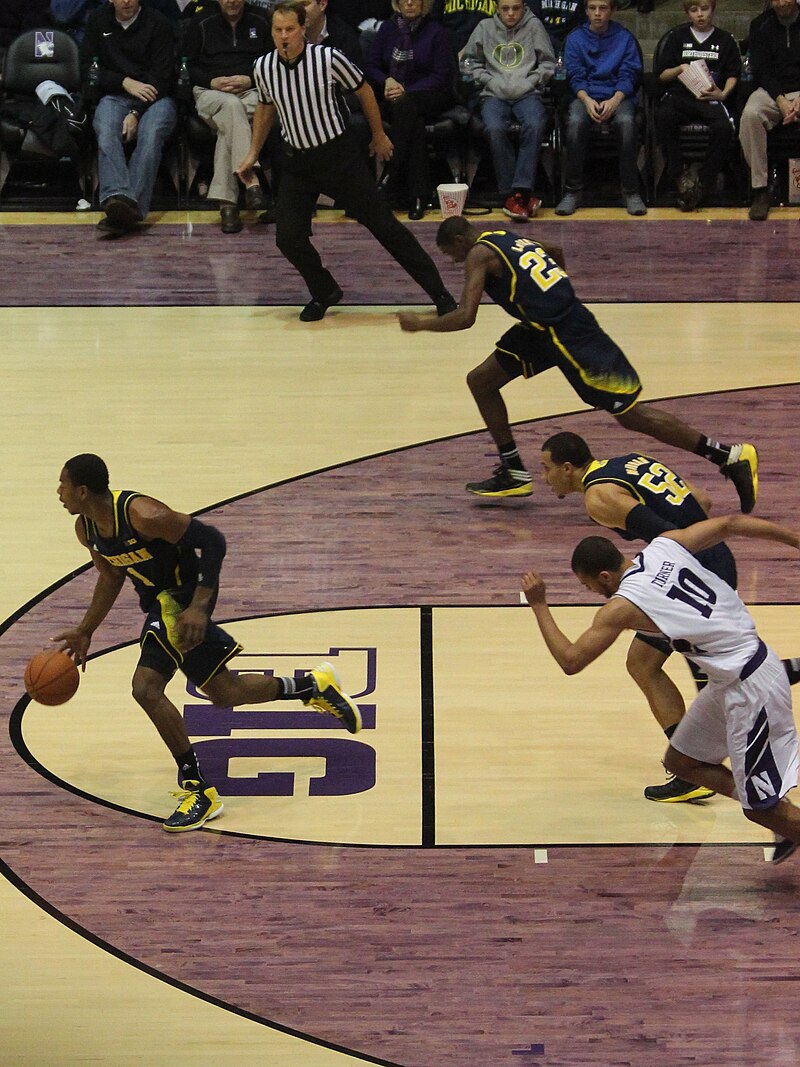
TonyTheTiger, 20130103 UofM fast break (1), CC BY-SA 3.0
Executing a fast break offense can be one of the most exhilarating and effective ways to score in basketball. The key is to transition from defense to offense swiftly, advancing the ball into the frontcourt within 2-3 seconds. This rapid shift creates immediate scoring opportunities before the opposing defense can set up.
During a fast break, players sprint down the court, maintaining proper spacing to open up passing lanes. This allows for layups, mid-range jump shots, and kick-out passes to open shooters. The success of this strategy relies on your team's speed, athleticism, quick decision-making, and accurate passing.
Here's a breakdown to help you understand the components of a fast break offense:
| Key Component | Description | Importance |
|---|---|---|
| Speed | Players sprinting down the court | Fundamental for quick transition |
| Spacing | Spreading out to create passing lanes | Vital for effective offense |
| Quick Decisions | Making fast, accurate choices | Prevents defensive setup |
| Scoring Opportunities | Layups, jump shots, kick-out passes | Maximizes scoring chances |
| Defensive Pressure | Forcing turnovers and missed shots | Initiates fast breaks |
This concise breakdown ensures that all aspects of a fast break offense are clear and actionable, providing a reliable foundation for effective gameplay.
Hybrid Offenses
Hybrid offenses in basketball offer a versatile blend of offensive strategies, allowing your team to adapt to various defenses. By integrating elements from multiple approaches, hybrid offenses enable you to tailor your gameplay to both your players' strengths and the opposing team's weaknesses.
Flexibility is the key feature of hybrid offenses. You can smoothly transition between fast breaks and controlled half-court executions based on the game situation. This adaptability allows your offensive players to create scoring opportunities from both motion offenses and set plays, ensuring a structured yet unpredictable offensive flow.
Mastering hybrid offenses hinges on effective ball movement. Your team must be skilled at reading defenses and facilitating passes to exploit mismatches. This demands a diverse skill set among players, enabling them to execute both individual and team-based plays proficiently. Whether running a fast break or setting up in the half-court, the ability to switch strategies keeps the defense on edge.
Coaches use hybrid offenses to maximize scoring opportunities, ensuring every player has the chance to contribute. This enhances overall team performance and prepares you to adapt seamlessly to different game situations.
Dribble-Drive Offense
View this post on Instagram
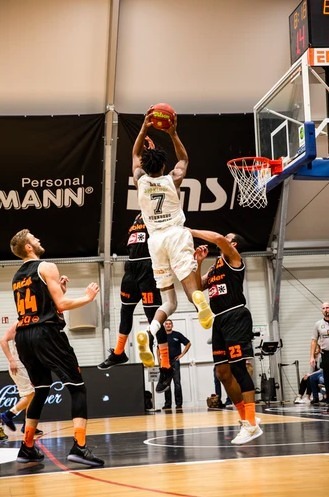
In the fast-paced world of basketball, the Dribble-Drive Offense distinguishes itself by creating dynamic driving lanes for players to penetrate the defense. This offense emphasizes aggressive ball-handling and quick decision-making, requiring players to excel in individual skills. Spacing is crucial, stretching the defense and allowing perimeter players to maneuver while post players set effective screens.
The key mindset in the Dribble-Drive Offense is to attack the basket relentlessly. Penetrating the defense forces it to collapse, creating opportunities to either finish at the rim or kick out to open shooters. This aggressive approach keeps defenders off balance and generates scoring chances for the entire team.
To master this offense, players should engage in drills that enhance their ability to read defenses, make quick passes, and finish strong at the basket. Emphasizing individual skill, these drills focus on beating defenders one-on-one and executing swift, decisive moves. Coaches often implement specific exercises to refine these abilities, ensuring effective execution of the Dribble-Drive Offense and keeping the defense constantly guessing.



.jpg)
.jpg)