When Did Euroleague Basketball Get Started?
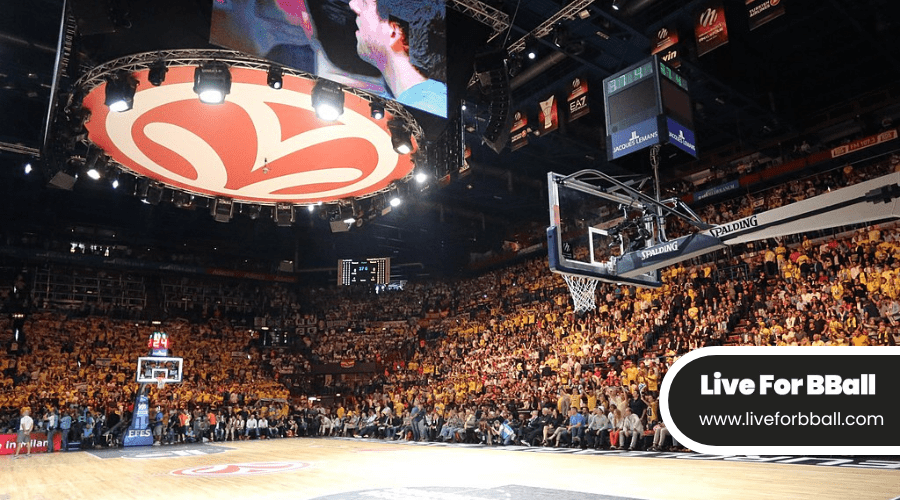
Savino Paolella, Forum Assago Euroleague Final Four 2014, CC BY 2.0
Euroleague Basketball began on October 16, 2000, following the decision of top European clubs to break away from the FIBA European Champions Cup, which had been established in 1958. This move was motivated by the clubs' desire for greater financial stability and competitive excellence. Understanding the milestones leading to this shift offers insights into the changing dynamics of European basketball.
Origins and Early Years
The EuroLeague, recognized today as Europe's premier basketball competition, has its roots in the FIBA European Champions Cup, which was inaugurated in 1958. Initially, this tournament operated in a knockout format, typical of that era, where leading basketball clubs from across Europe competed in direct elimination rounds.
A significant transformation occurred in 1991 with the establishment of the FIBA European League, transitioning the competition towards a more structured league format. This evolution continued until 1996, when the tournament was rebranded as the FIBA EuroLeague. Throughout this period, the EuroLeague was governed by FIBA, serving as a prominent stage for showcasing Europe's top basketball talent.
Transition to Euroleague
The transition to the EuroLeague marked a pivotal moment in European basketball. In 2000, top clubs broke away from FIBA to establish a new league aimed at enhancing both financial and competitive aspects. By 2001, the EuroLeague unified these separated factions, creating a premier competition for Europe's elite teams.
Split From FIBA
Breaking away from FIBA's longstanding control, the EuroLeague basketball competition marked a significant change in European club basketball with the 2000-01 season. This split allowed professional clubs to operate independently from FIBA's governance, which had been in place since the European Champions Cup's inception in 1958. The primary motivations for this move were trademark issues and financial incentives. Leading teams sought greater autonomy and improved revenue opportunities, culminating in the formation of the EuroLeague.
In the inaugural 2000-01 season, the division in European basketball was evident as Maccabi Tel Aviv and Kinder Bologna emerged as champions in their respective leagues. This shift fostered a more competitive environment among Europe's elite clubs, similar to the UEFA Champions League in football. The EuroLeague's creation introduced a licensing system that guaranteed participation for certain teams, ensuring sustained engagement among top clubs.
The split from FIBA enabled the EuroLeague to offer a more attractive and competitive platform for professional clubs. This new structure focused on enhancing the quality of play and increasing financial stability, ultimately reshaping the landscape of European club basketball.
Unified Competition Formation
Following the split from FIBA, the EuroLeague swiftly organized a more cohesive and competitive structure for European club basketball. The 2000-01 season was pivotal, featuring two separate leagues: FIBA's SuproLeague and the newly branded EuroLeague. This dual setup resulted in two continental champions, underscoring the need for a unified competition.
By 2001, unification was achieved, integrating teams from FIBA's SuproLeague into the Euroleague Basketball framework. This consolidation allowed the EuroLeague to modernize its image and elevate its stature within European basketball. Euroleague Basketball took charge of club competitions, while FIBA retained authority over national team contests, ensuring a clear division of responsibilities.
Key points of the transition include:
- Rebranding: The name change to EuroLeague in 2000 aimed to modernize the competition's image.
- Unified Competition: By 2001, integrating SuproLeague teams created a single, stronger league.
- Authority: Euroleague Basketball managed club competitions, while FIBA oversaw national teams.
This unified approach helped Euroleague Basketball build a more structured and prestigious competition.
Competition Format Evolution
Beginning with the 2000-01 season, the EuroLeague underwent a significant transformation that laid the foundation for its contemporary structure. The competition adopted a true league format, initially comprising 16 professional basketball clubs. This change enhanced the quality of play and heightened the season's intensity as teams competed for top positions.
In the 2016-17 season, the league expanded to include 18 teams, further enriching the competition. Each team now plays 34 games in a double round-robin format, facing every other team both at home and away. This rigorous schedule ensures regular and fair competition among all clubs.
The top 8 teams from the regular season advance to the playoffs, which are conducted in a best-of-five series. Higher-seeded teams benefit from home-court advantage, adding another strategic element to the competition. The season culminates in the highly anticipated Final Four, featuring two semi-finals, a third-place game, and the championship game. This exciting finale determines the EuroLeague champion, crowning the best team in European professional basketball.
The evolution of the format has solidified the EuroLeague's status as a premier competition in global basketball.
Key Historical Milestones
View this post on Instagram
The EuroLeague's storied history includes critical milestones that have shaped its development into a premier basketball competition in Europe. The journey began in 1958 with the establishment of the FIBA European Champions Cup, which set the foundation for professional basketball on the continent.
Here are three key historical milestones:
- Transition to FIBA EuroLeague (1996): In 1996, the competition was rebranded as the FIBA EuroLeague, introducing a new structure and enhancing the visibility of European professional basketball.
- Formation of ULEB Euroleague (2000-01 season): During the 2000-01 season, top clubs formed their own competition, leading to the creation of the ULEB Euroleague. This significant split from FIBA marked a transformative period, redefining the landscape of the competition.
- Unified EuroLeague (2001): By 2001, the competition unified under the EuroLeague banner, integrating teams from the former FIBA SuproLeague. The unified format officially began on October 16, 2000, with a game between Real Madrid and Olympiakos.
These milestones have been crucial in establishing the EuroLeague as a dominant force in professional basketball, enhancing its commercial appeal and solidifying its status among the top European clubs.
Broadcasting and Media Coverage
Building on the EuroLeague's rich history, the competition's broadcasting and media coverage have been pivotal in its global reach and popularity. The EuroLeague broadcasts are available in up to 201 countries and territories, reaching approximately 245 million households weekly in China alone. This extensive coverage ensures the competition captivates a diverse array of audiences worldwide.
Since the 2023 playoffs, ESPN has become the primary broadcaster in the U.S., significantly enhancing the league's visibility. Prior to ESPN, the games were aired on NBA TV and FloSports until 2019. These partnerships with major networks have been instrumental in bringing EuroLeague action to fans everywhere. Additionally, EuroLeague TV offers internet pay-TV services, enabling fans to watch games from anywhere.
The financial impact of media coverage is substantial, with IMG guaranteeing €630 million for broadcasting rights, underscoring the league's economic significance. Global marketing partnerships in key markets like Germany, Russia, Turkey, Spain, and Greece further boost the league's visibility and engagement. These strategic partnerships and comprehensive media coverage ensure that the EuroLeague remains at the forefront of international basketball competition, connecting with households and fans around the globe.
Significant Records and Achievements
Throughout its storied history, the EuroLeague has witnessed remarkable feats and records that highlight the competition's intensity and skill. As a fan of professional basketball, you'll appreciate the incredible achievements and milestones of both teams and individual players in this prestigious league.
Consider these standout records:
- Most Titles Won: Real Madrid has secured an impressive 11 EuroLeague championships, showcasing their consistent dominance and excellence within the competition. This achievement cements their legacy as one of the greatest teams in EuroLeague history.
- Consecutive Championships: The team from Split set a modern-era benchmark by winning three consecutive EuroLeague titles. This rare accomplishment underlines their exceptional teamwork and strategic prowess during their reign.
- Largest Score Differential: Maccabi Tel Aviv holds the record for the largest margin of victory in a EuroLeague Finals game, defeating their opponents by an astounding 44 points. This record reflects their overwhelming performance and tactical superiority in that championship match.
Individual achievements are equally impressive. Radivoj Korać's 99-point game in 1965 remains unparalleled, while Nigel Hayes' 50-point performance in 2024 stands out as the highest since 2000. These scoring records highlight the extraordinary talent and skill present in the EuroLeague, making it a thrilling competition to follow.